

Solar street lights have become an increasingly popular solution for outdoor lighting applications, especially in areas without reliable grid power. Compared with traditional AC street lights, solar lighting offers advantages such as easier installation, lower operating costs, and independence from the electrical grid.
However, when selecting a solar street light, many buyers face an important question: Should they choose an all-in-one solar street light or a split solar street light?
Both designs have their own advantages and application scenarios. Understanding the differences between these two systems helps buyers select the right solution based on project requirements, installation conditions, and long-term performance expectations.
1. What Are All-in-One and Split Solar Street Lights?
The main difference between these two solar street light designs is the way the components are integrated.
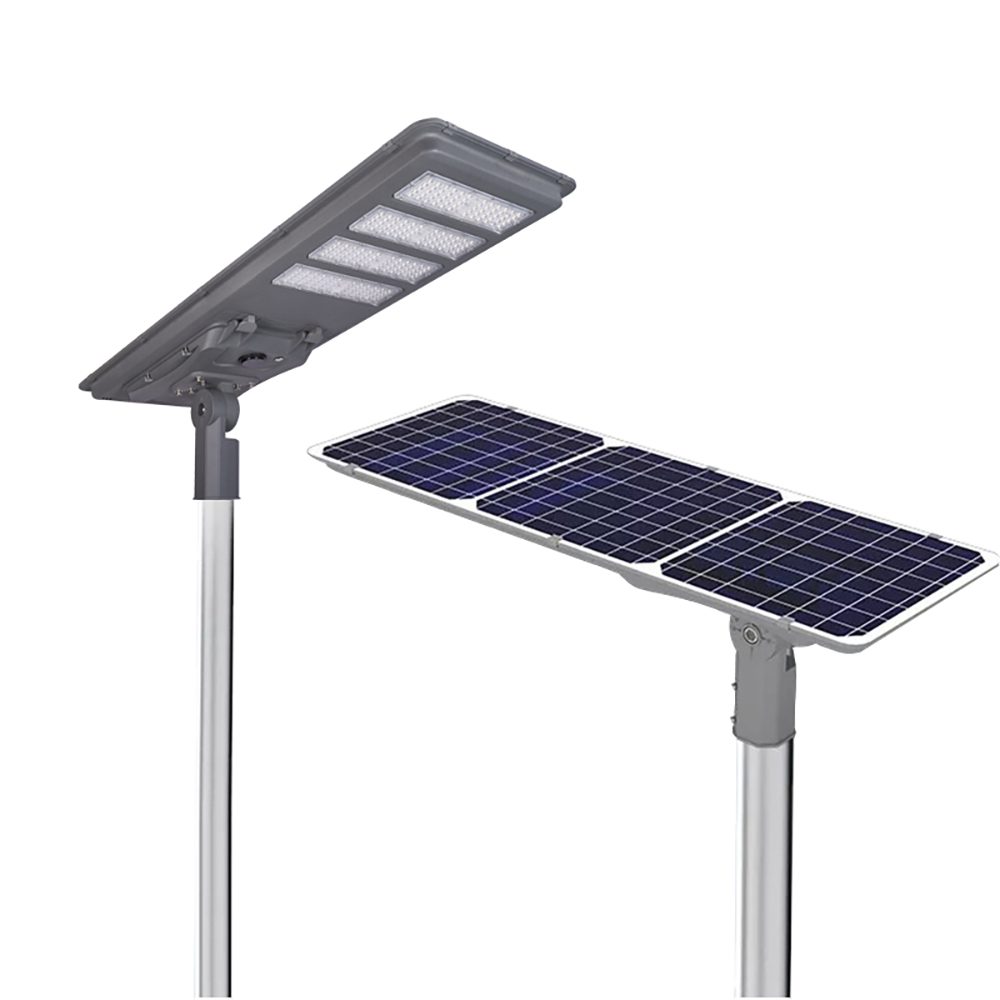
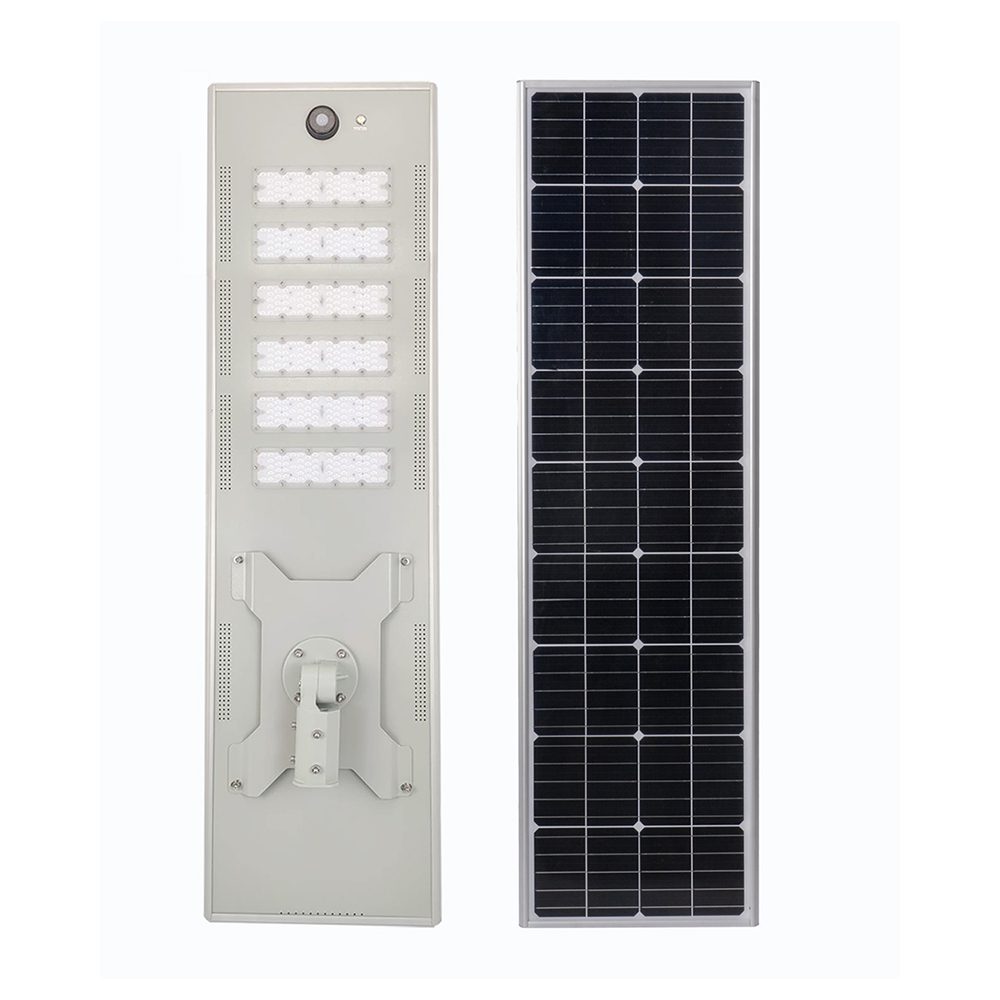
An all-in-one solar street light integrates the solar panel, lithium battery, LED light source, and controller into a single compact housing. All components are installed together on the lamp body, creating a simple and clean lighting solution. A split solar street light separates the main components. The solar panel, battery, and LED lamp head are installed independently and connected through cables. This design allows each component to be customized according to project requirements. Although both systems use solar energy and LED technology, their structures determine their different strengths.
2. Advantages of All-in-One Solar Street Lights
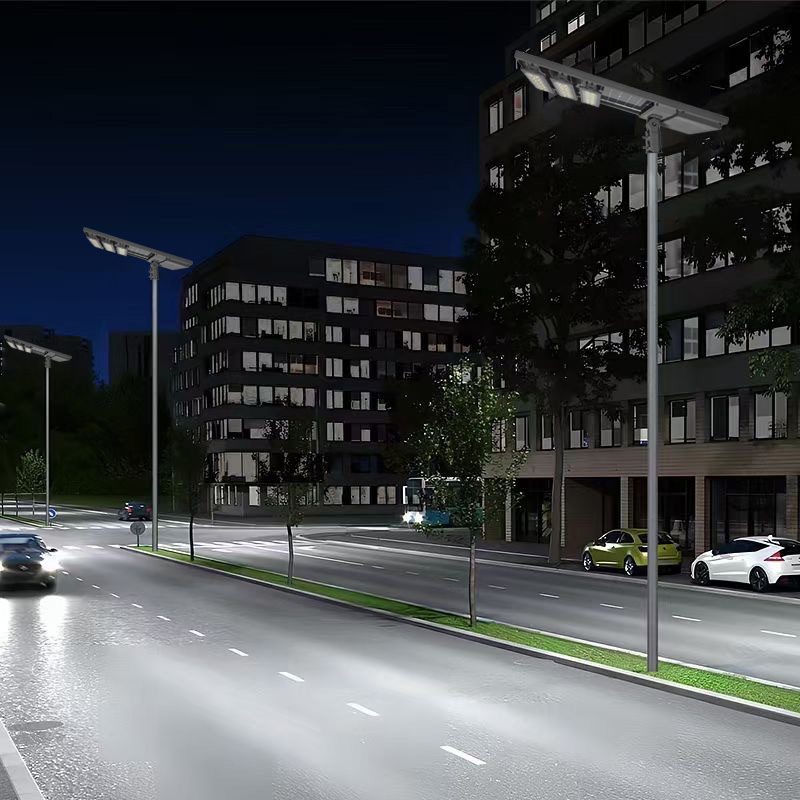
The biggest advantage of all-in-one solar street lights is simplicity. Because all components are integrated into one unit, installation is much easier compared with traditional solar systems. There is no need to install separate battery boxes or additional solar panel brackets, which reduces installation time and labor costs. This compact design also makes transportation and maintenance more convenient. For small and medium-sized projects, users can quickly deploy lighting systems without complex construction work.
All-in-one solar street lights are especially suitable for: Residential roads、Rural roads、Gardens and parks、Small parking areas、Community lighting projects. Another advantage is aesthetic appearance. Since there are fewer external cables and components, the installation looks cleaner and more modern. However, all-in-one designs also have certain limitations. Due to the limited space available on the lamp body, the solar panel size and battery capacity are usually restricted. Therefore, they are generally more suitable for moderate lighting requirements rather than large-scale high-power applications.
3. Advantages of Split Solar Street Lights
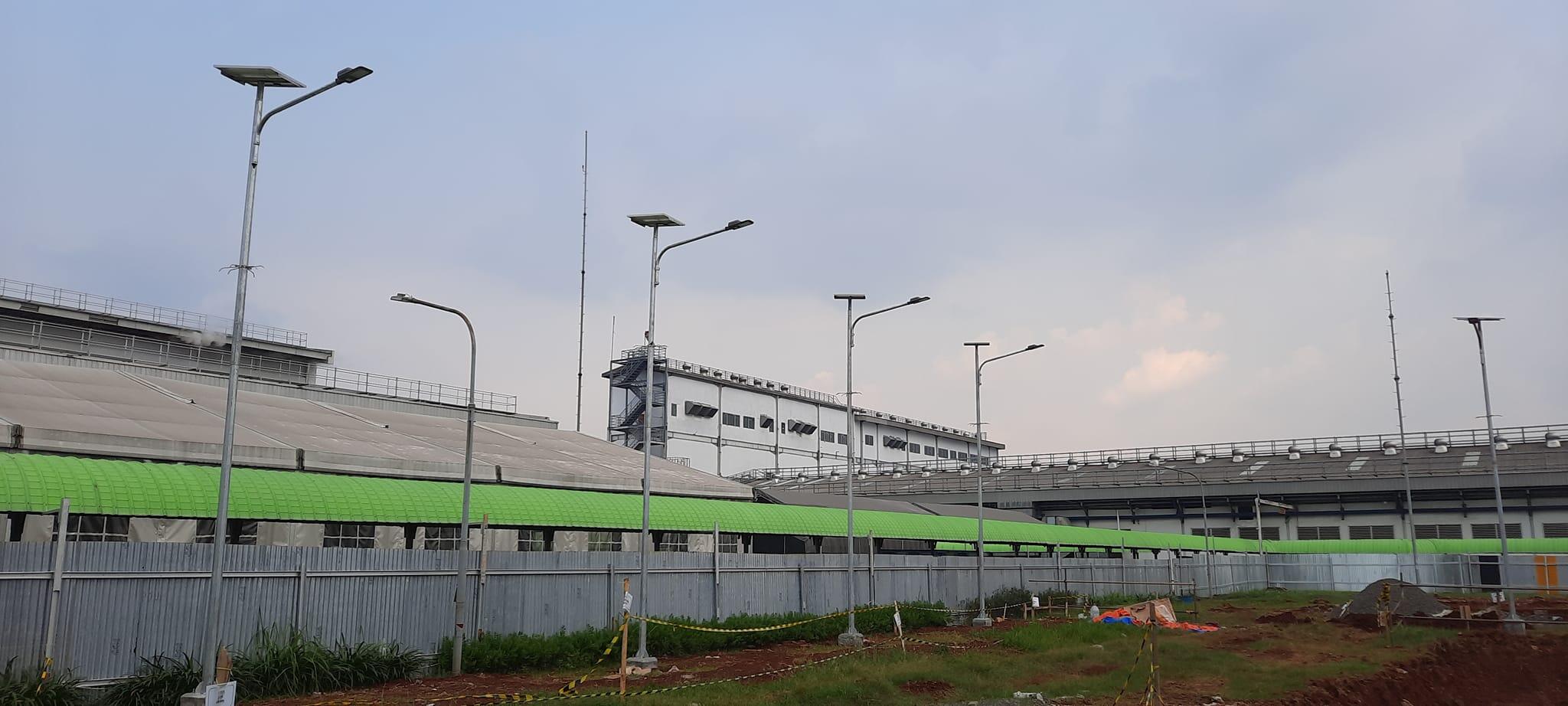
Compared with integrated models, split solar street lights provide greater flexibility in system design. Since the solar panel and battery are installed separately, each component can be increased according to actual project requirements. Larger solar panels can collect more energy, while larger battery capacities can provide longer backup time during cloudy or rainy periods. This makes split solar street lights more suitable for projects with higher lighting requirements or more challenging environmental conditions.
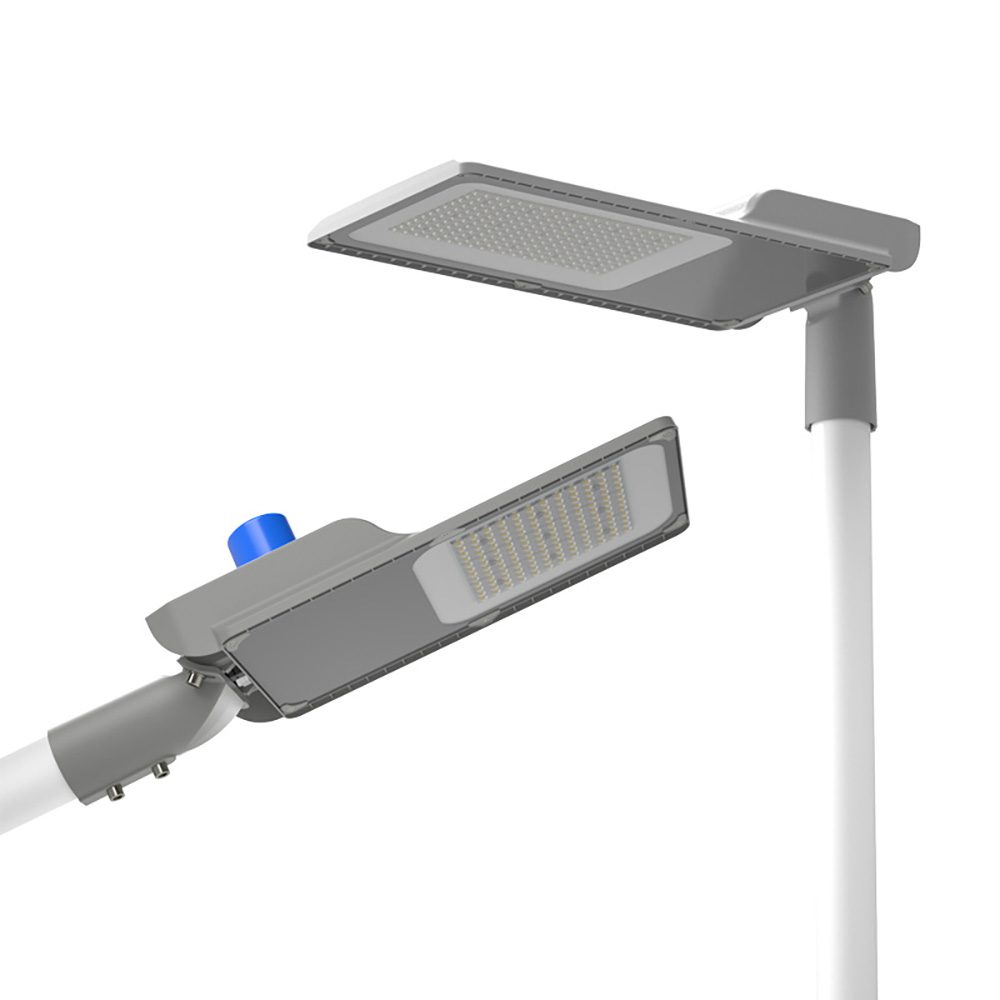
Typical applications include: Main roads and highways、Industrial areas、Large parking lots、Remote areas with limited sunlight、Projects requiring longer working hours. Another important advantage is better heat management. Since the battery is separated from the LED lamp body, heat generated by the LED module has less impact on battery performance, which can improve system reliability in high-temperature environments. The main disadvantage of split solar street lights is that installation is more complicated. Additional brackets, cables, and installation work are required, which may increase initial installation costs.
4. Which Factors Should You Consider When Choosing?
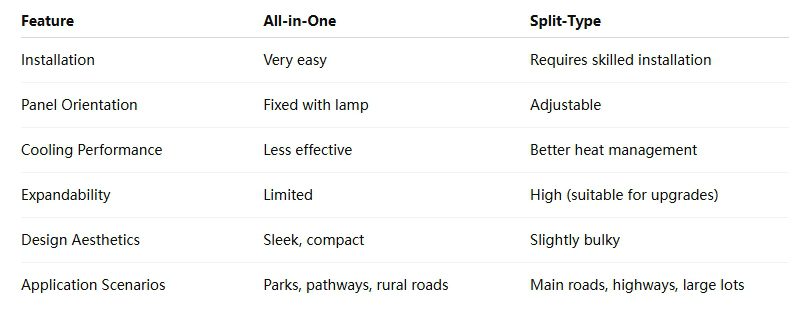
Choosing between an all-in-one and split solar street light depends on several project conditions. First, consider the lighting requirement. For basic road lighting with moderate brightness requirements, an all-in-one system is often sufficient. For higher brightness levels, longer operation time, or larger coverage areas, a split system provides more design flexibility. Second, consider the local climate and sunlight conditions. Areas with frequent cloudy weather or shorter sunshine hours may require larger solar panels and batteries, making split systems more suitable. Third, consider installation conditions. If the project requires fast installation with minimal construction work, all-in-one solar lights provide a convenient solution. If the project is a long-term infrastructure investment, the flexibility of split systems may offer greater value.
5. Why Solar Street Light Configuration Matters More Than Product Type
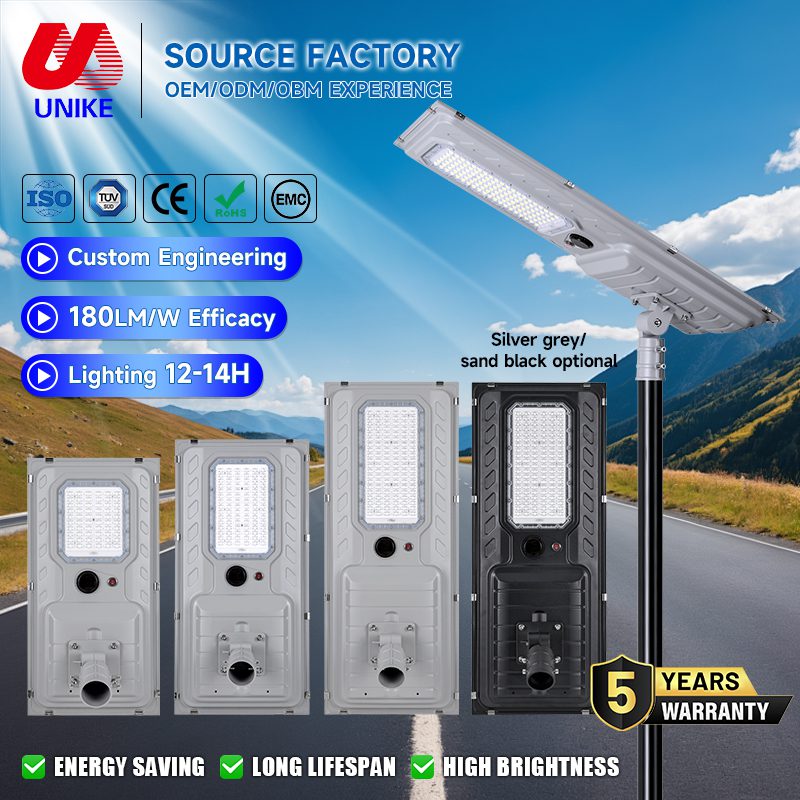
When comparing solar street lights, many buyers focus only on whether the product is integrated or split. However, the overall system configuration is actually more important. A reliable solar street light depends on the balance between:
- Solar panel capacity
- Battery capacity and quality
- LED efficiency
- Controller performance
- Lighting distribution
- Installation height
For example, a high-quality all-in-one solar street light with proper configuration may outperform a poorly designed split system. Similarly, a split solar street light with insufficient battery capacity will not deliver reliable performance. Therefore, professional selection should always start from project requirements rather than simply choosing one product type.
6. Conclusion
Both all-in-one and split solar street lights have their own advantages. All-in-one solar street lights provide simplicity, easy installation, and cost efficiency, making them ideal for residential areas, rural roads, and small outdoor lighting projects. Split solar street lights offer higher flexibility, stronger system capacity, and better adaptability for demanding applications such as highways, industrial areas, and large-scale projects. The best solar lighting solution is not always the most powerful or the most expensive one. It is the system that matches the local environment, lighting requirements, and project goals. By understanding the differences between these two designs, buyers can make more informed decisions and choose solar street lights that deliver reliable performance and long-term value.