
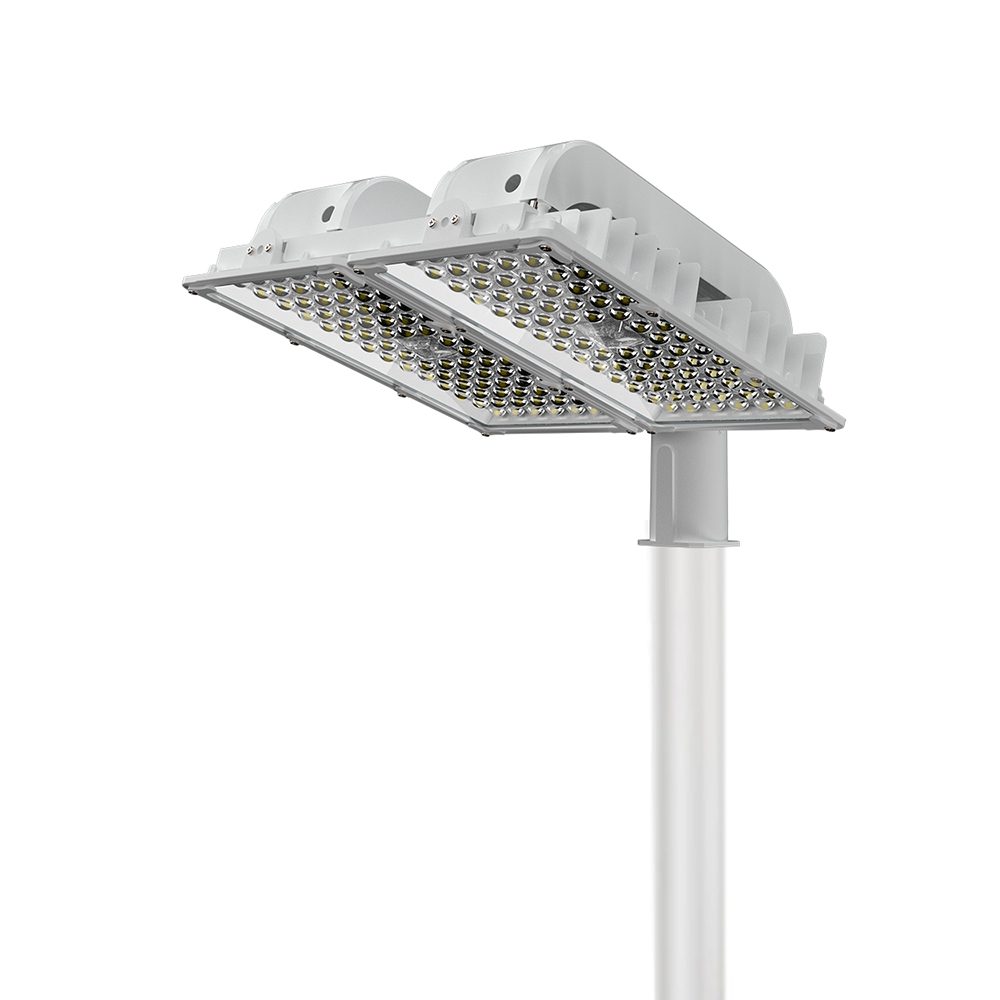
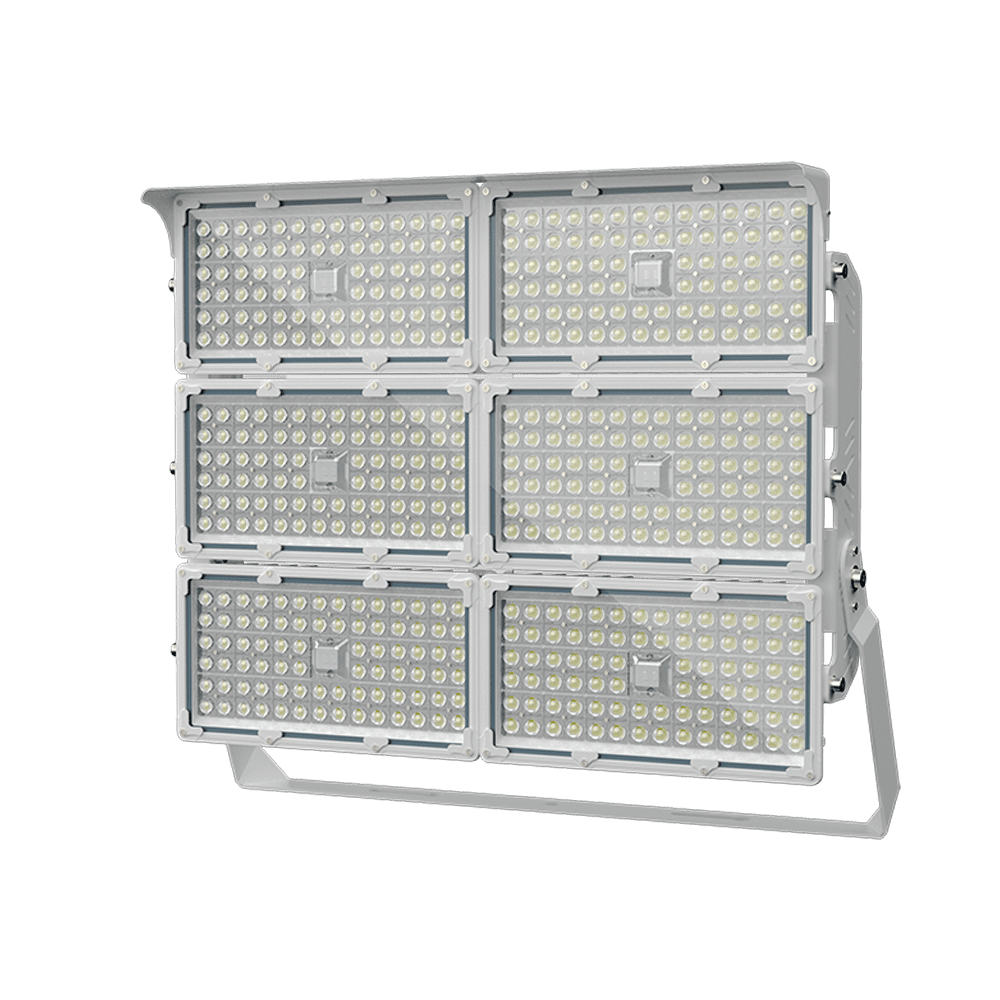

Sports field lighting is much more than simply installing high-power LED floodlights around a playing area. A professional lighting system must provide sufficient brightness, uniform illumination, comfortable visibility, and effective glare control.
Many lighting problems in sports facilities are not caused by insufficient power, but by incorrect lighting design. Poor fixture positioning, unsuitable beam angles, or improper installation height can result in dark areas, excessive brightness, and uncomfortable glare for players and spectators.Understanding how to match installation height, beam angle, and lighting layout is essential for achieving high-quality sports lighting performance.
Why Accurate Light Distribution Matters in Sports Lighting
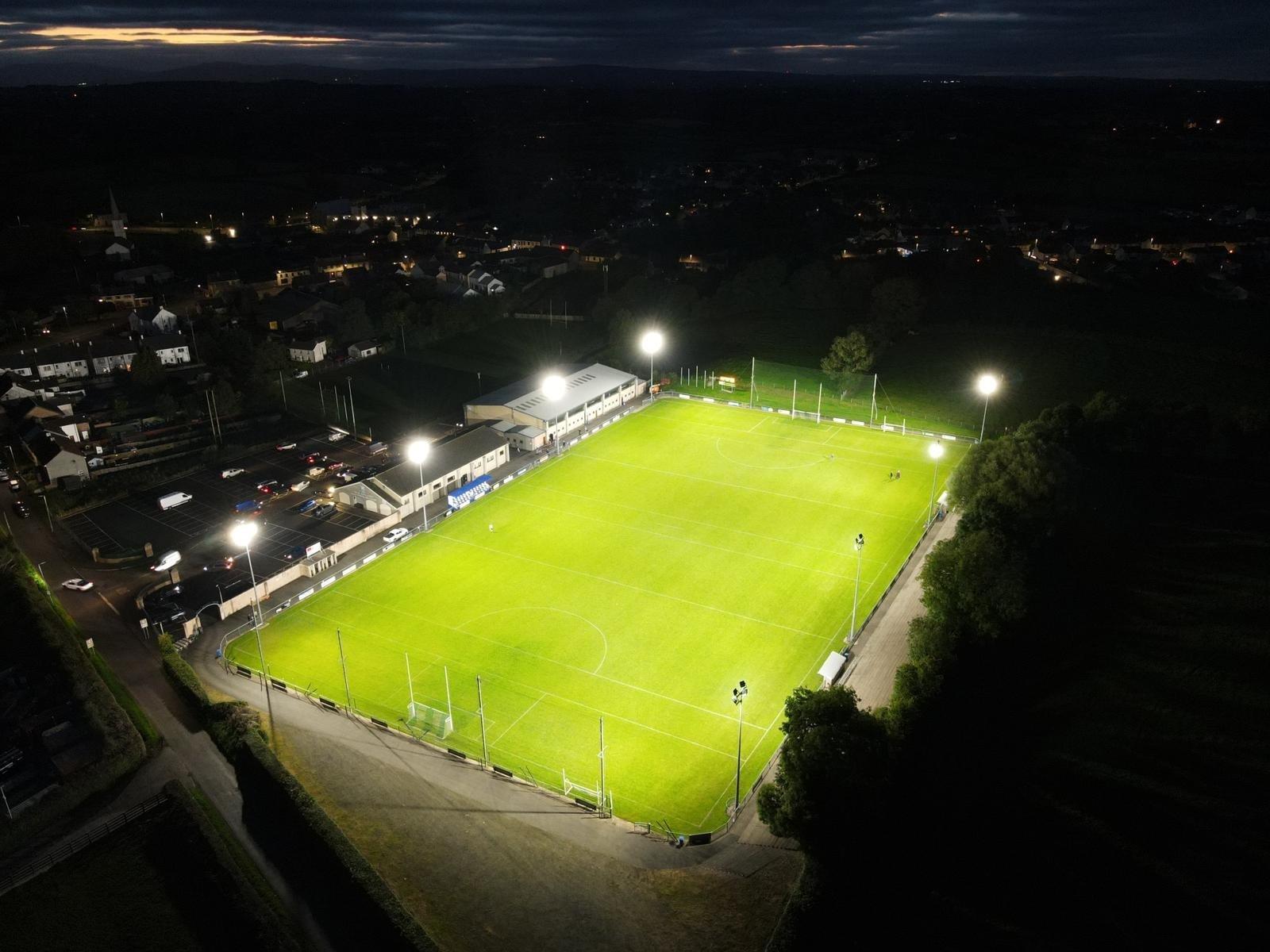
Unlike general outdoor lighting, sports lighting has strict requirements because players need to track fast-moving objects while maintaining clear vision. For example, in football, tennis, basketball, and other sports, athletes frequently look upward to follow the movement of the ball. If floodlights create strong glare in their field of view, reaction speed and performance can be affected. A good sports lighting system should achieve three important goals:
First, the entire playing area should receive sufficient illumination without obvious dark zones. Second, the brightness difference between different areas should be minimized to improve visual comfort. Third, light should be directed precisely onto the field instead of spreading unnecessarily into surrounding areas. This is why professional sports lighting focuses heavily on optical design rather than simply increasing fixture wattage.
The Relationship Between Field Size and Installation Height
One of the most important principles in sports lighting design is the relationship between field size and mounting height. For small courts such as tennis courts, basketball courts, and pickleball courts, lower installation heights may be sufficient because the lighting area is limited. For larger fields such as football fields, rugby fields, and outdoor stadiums, higher poles are usually required. A higher mounting position allows the light beam to cover a larger area and reduces the direct viewing angle between players and the light source.
If high-power floodlights are installed too low, several problems may occur: Strong glare for players、Uneven illumination、Excessive brightness near the pole area、Poor coverage at distant areas. Therefore, larger sports fields usually require higher mounting heights combined with professional optical design.
How Beam Angle Affects Sports Field Lighting
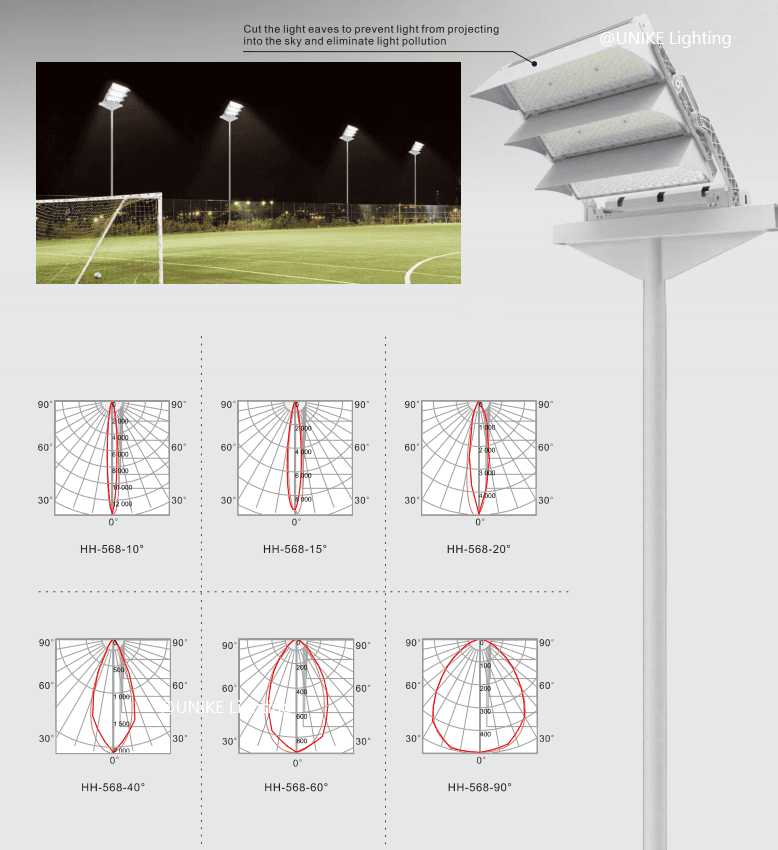
Beam angle is one of the key factors determining how light is distributed. A narrow beam angle concentrates light over a longer distance, making it suitable for situations where the fixture needs to illuminate areas far away from the installation point. A wider beam angle spreads light over a larger area, which is useful for shorter distances and wider coverage requirements.
In sports lighting applications, the selection of beam angle depends on several factors, including: Distance between the pole and playing area、Installation height、Field dimensions、Required lighting uniformity. For example, floodlights installed on high poles at the edge of a large football field often require narrower optical distributions to accurately project light toward the center area. For smaller courts with shorter mounting distances, wider beam angles may provide better coverage and reduce the number of fixtures required. The goal is not to choose the smallest or widest beam angle, but to select the optical distribution that matches the actual layout.
Why Glare Control Is Critical
Glare is one of the biggest challenges in sports lighting design. A lamp with high brightness does not automatically provide good sports lighting. If the light source is directly visible to players, it can create discomfort and reduce visibility. There are several ways to control glare: The first is increasing installation height. Higher mounting positions reduce the direct viewing angle between players and the LED source. The second is using suitable optical lenses. Professional sports floodlights use precise beam control to direct light toward the playing area instead of the players’ eyes. The third is optimizing pole positions and aiming angles. Even a high-quality fixture can create glare if it is installed or adjusted incorrectly. Therefore, glare control requires cooperation between fixture design and lighting layout.
Different Sports Require Different Lighting Solutions
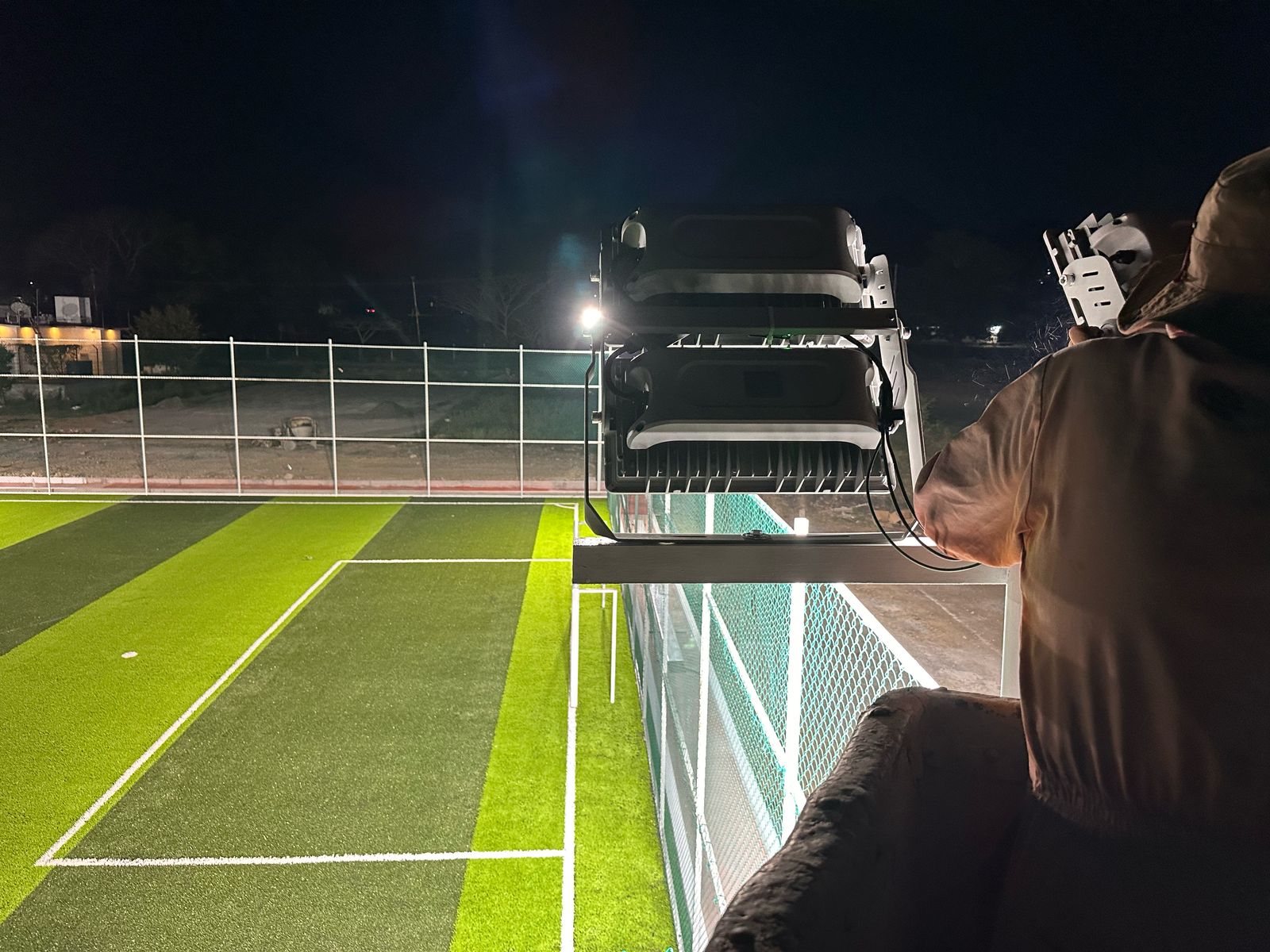
Every sports venue has different lighting requirements. A football field requires long-distance projection because of its large size. Multiple poles with carefully selected beam angles are usually used to achieve uniform coverage. A tennis court requires more attention to vertical illumination because players need to track the ball trajectory at different heights. A basketball or pickleball court has a smaller area but requires good uniformity and comfortable lighting because players move quickly within a limited space. This means there is no universal “best” floodlight configuration. The lighting solution must be designed according to the sport, field size, and expected usage level.
Beyond Wattage: What Really Defines a Good Sports Floodlight
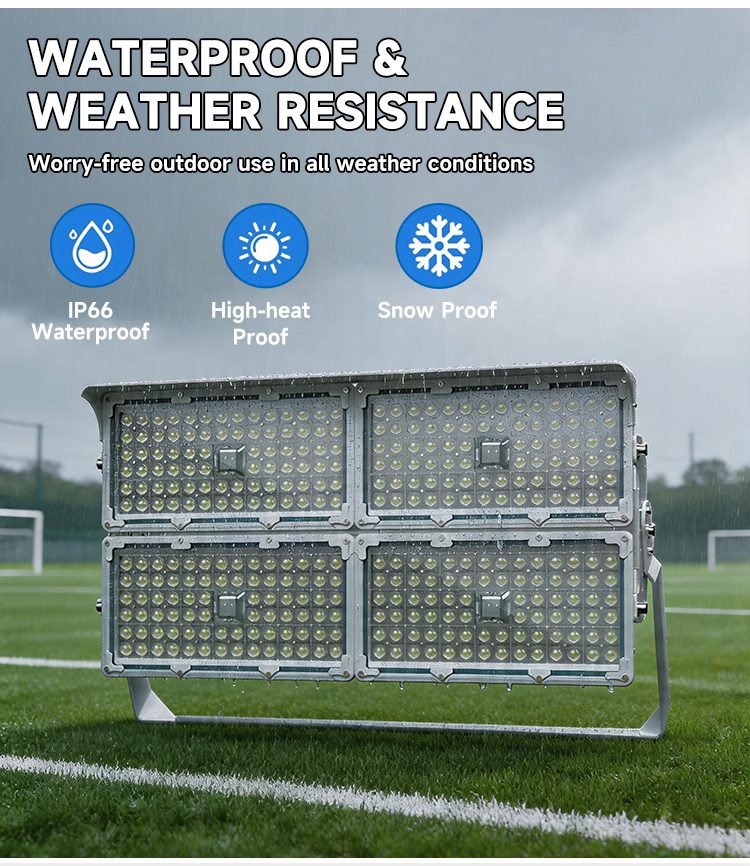
When selecting sports lighting, many customers focus only on wattage. However, wattage alone cannot determine lighting quality. A professional evaluation should also consider luminous efficiency, optical design, beam angle, installation height, glare control, and lighting uniformity. A lower-power fixture with excellent optical efficiency may achieve better results than a higher-power fixture with poor light distribution. For this reason, professional sports lighting projects often require lighting simulation before installation to verify whether the proposed design can achieve the expected performance.
Conclusion
A successful sports field lighting system is not created by simply adding more powerful LED floodlights. It requires precise coordination between fixture selection, beam angle, installation height, and lighting layout. Larger fields usually require higher mounting positions and more controlled optical distribution, while smaller courts may benefit from wider beam angles and simpler layouts. By focusing on accurate light distribution and effective glare control, sports facilities can achieve better visibility, improved player experience, and more efficient energy usage. Professional lighting design is ultimately about putting the right amount of light in the right place—not simply producing more light.