

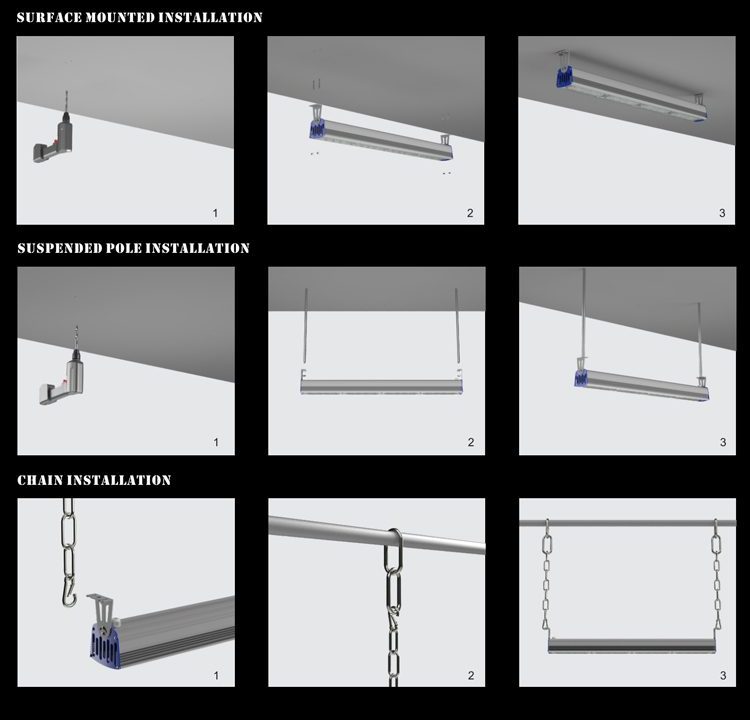
Installing a high bay light correctly is just as important as selecting the right wattage, beam angle, and luminous efficiency. In warehouses, factories, logistics centers, and other high-ceiling facilities, the installation method determines the fixture’s mounting position, stability, maintenance access, and ultimately the quality of the lighting.
Depending on the building structure and the type of high bay fixture, several mounting methods are commonly used, including chain suspension, suspended rod installation, and surface mounting with brackets. Before installation, always check the mounting accessories supplied with the specific fixture, as the exact fixing method may vary between products.
1. Chain Suspension: A Flexible Installation Method
Chain suspension is a practical option for many industrial high bay applications.
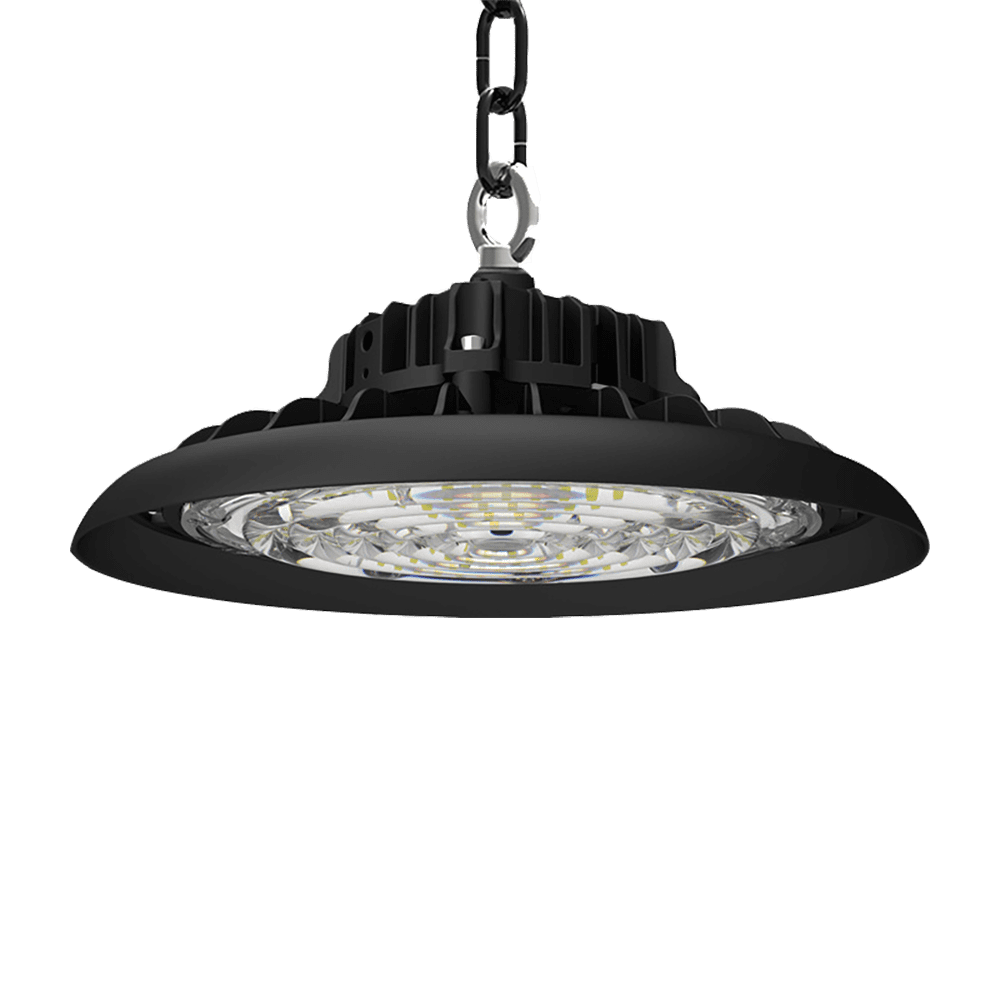
The fixture is connected to a ceiling fixing point using a chain and mounting hook. The chain provides some flexibility in determining the final installation height, making it useful when the ceiling structure or required mounting height needs adjustment. The basic installation process is relatively straightforward. First, a suitable fixing point is secured to the ceiling structure. The chain is then connected between the fixing point and the mounting points on the high bay light. Once the fixture is suspended, its height and horizontal position can be adjusted before the electrical connection is completed.
Chain mounting is particularly suitable for warehouses, workshops, and factories where the ceiling structure provides convenient suspension points. However, the fixing point must be strong enough to support the fixture. The chain and associated hardware should also be selected according to the weight of the LED high bay light.
2. Suspended Rod Installation: Stable and Professional
Suspended rod installation uses rigid rods instead of chains to suspend the fixture from the ceiling.
As shown in the installation diagram, two suspension points can be connected to the fixture, creating a stable hanging structure. The rods keep the fixture at a relatively fixed position and can provide a cleaner appearance than chain suspension. This method can be useful when the lighting layout requires fixtures to remain at a consistent height and orientation.
For linear high bay lights, suspended rods can also help maintain a straight and uniform installation across long production lines or warehouse aisles. Before installation, the required rod length should be determined according to the ceiling height and desired mounting position. The ceiling fixing points should be aligned carefully so that the fixture remains level after installation.
3. Surface Mounting: When Suspension Is Not Practical
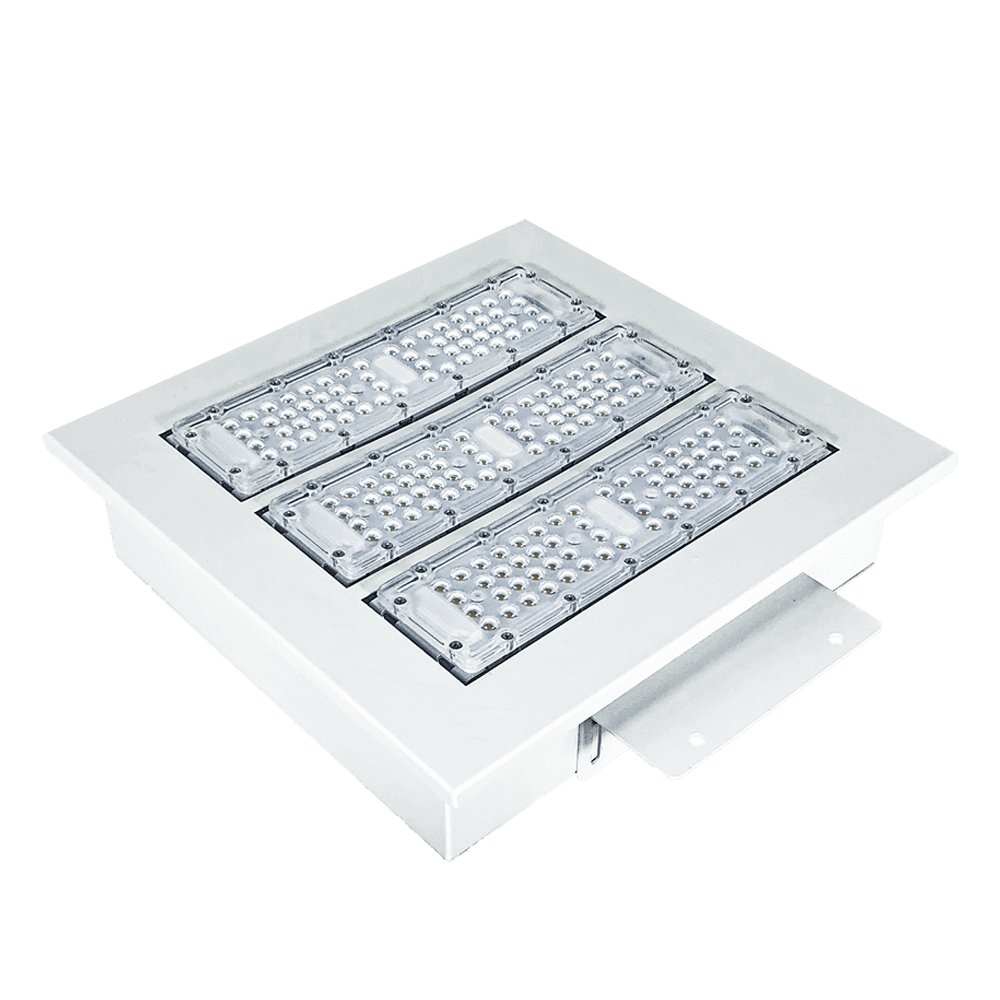
Not every industrial building is suitable for suspended installation. Some facilities have structural ceilings, limited suspension points, or existing mounting structures that make direct suspension inconvenient. In these situations, surface mounting can be a practical alternative. With surface mounting, the high bay light is fixed directly to the ceiling or supporting structure using dedicated mounting brackets.
The installation diagram shows a bracket attached to the fixture and then secured to the ceiling. Depending on the fixture design, there may be different types of brackets for this installation method. Surface mounting keeps the fixture closer to the ceiling and can be useful where the available vertical space is limited. However, the supporting structure must be strong enough to carry the fixture. Installers should also make sure that the bracket is correctly secured before connecting the electrical wiring.
4. How to Choose the Right Installation Method
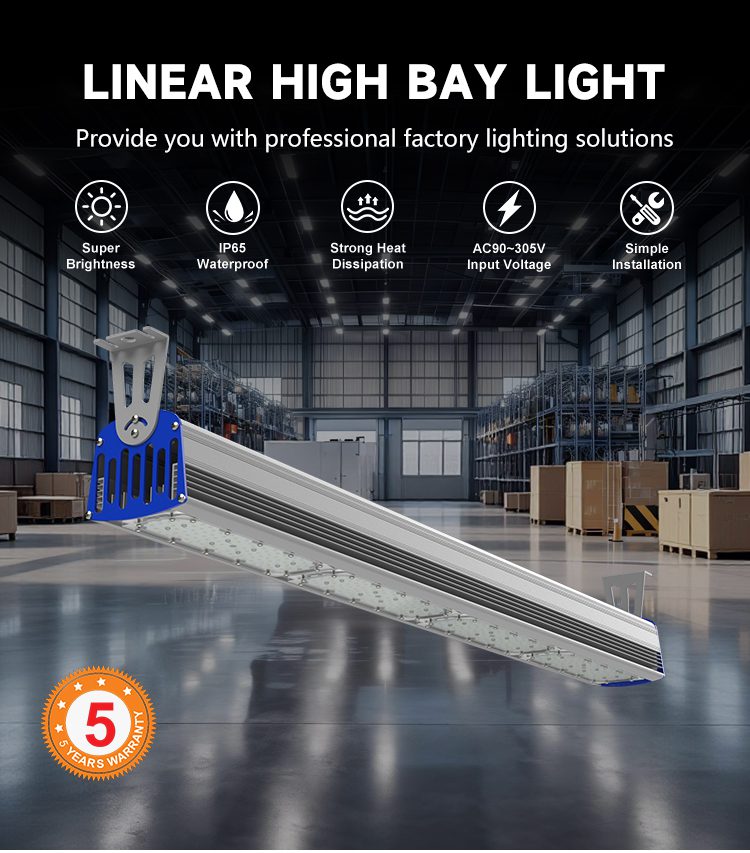
The best mounting method depends on the building structure, ceiling height, fixture design, and lighting layout.
For large warehouses and factories with suitable suspension points, chain installation can provide flexibility and relatively simple adjustment. Suspended rods are useful when a more stable and uniform mounting arrangement is required, particularly for linear high bay lights installed above production lines or long aisles. Surface mounting is more suitable when the fixture needs to be installed directly against a ceiling or structural support. The installation method should therefore be considered before purchasing the lights. Buyers should confirm which mounting accessories are included and whether additional brackets, rods, chains, or fixing hardware are required for the project.
5. Check the Mounting Height Before Installation
Mounting height has a direct relationship with the lighting effect.
Installing a high bay light too low may create excessive brightness in certain areas and increase glare. Installing it too high may reduce the illuminance reaching the working plane. The required height also depends on the beam angle. A wider beam can distribute light over a larger area, while a narrower beam concentrates light into a smaller area.
For this reason, the installation height, beam angle, fixture spacing, and lighting layout should be considered together rather than separately. For warehouses with long aisles, for example, the position of each fixture should correspond with the aisle layout to achieve better uniformity.
6. Safety Checks Before Switching on the Lights
Before completing the installation, check that every mechanical connection is secure.
For suspended installations, verify that the ceiling fixing points, chains or rods, hooks, and fixture mounting points are properly connected. For surface-mounted installations, check that all brackets and screws are firmly secured. The electrical connection should be completed by qualified personnel according to local electrical requirements. It is also important to make sure that cables are properly routed and supported rather than hanging loosely from the fixture. After installation, check whether the fixture is level and correctly oriented. The lights can then be tested to confirm that all units operate normally.
7. Installation Is Part of the Lighting Design
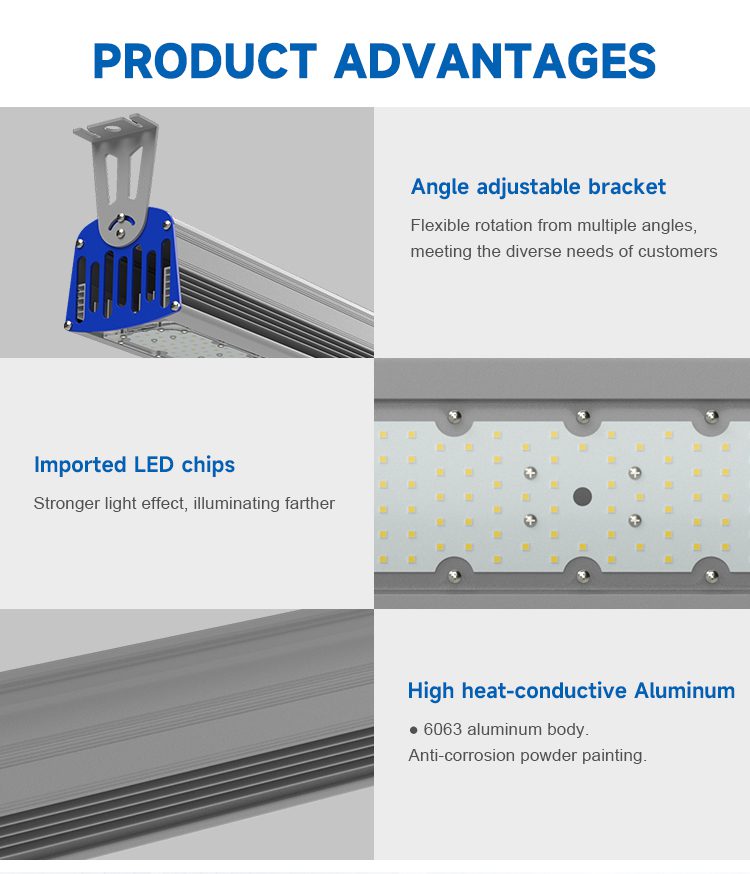
A high-quality industrial high bay light cannot deliver its full potential if it is installed incorrectly.
The fixture’s mounting position affects the distribution of light across the working area. Even a high-efficiency LED fixture may produce poor results if the spacing, mounting height, or orientation is unsuitable. For large projects, it is therefore recommended to complete a lighting layout before installation. Factors such as ceiling height, working-plane height, aisle width, fixture spacing, beam angle, required illuminance, and uniformity should be evaluated together. This is especially important for warehouses, factories, logistics centers, and production facilities where consistent illumination is required across a large area.
Conclusion
High bay lights can generally be installed using several methods, including chain suspension, suspended rods, and surface mounting with brackets.
Chain suspension provides flexibility, suspended rods offer a stable and uniform solution, while surface mounting is useful when the fixture needs to be installed directly onto a ceiling or structural support. The right method depends on the building structure and the specific high bay lighting fixture. Before purchasing, buyers should confirm the available mounting options and accessories with the supplier. More importantly, installation should not be treated as an independent step after purchasing the fixture. Mounting height, beam angle, spacing, and installation position all influence the final lighting performance. A properly selected and correctly installed high bay light can provide more uniform illumination, easier maintenance, and reliable long-term performance in demanding industrial environments.