
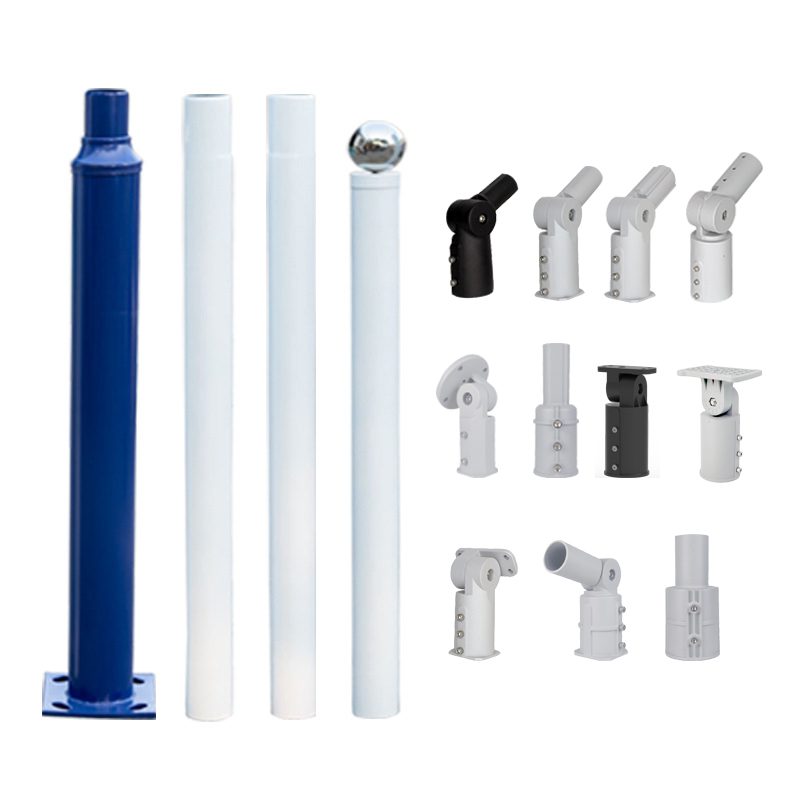
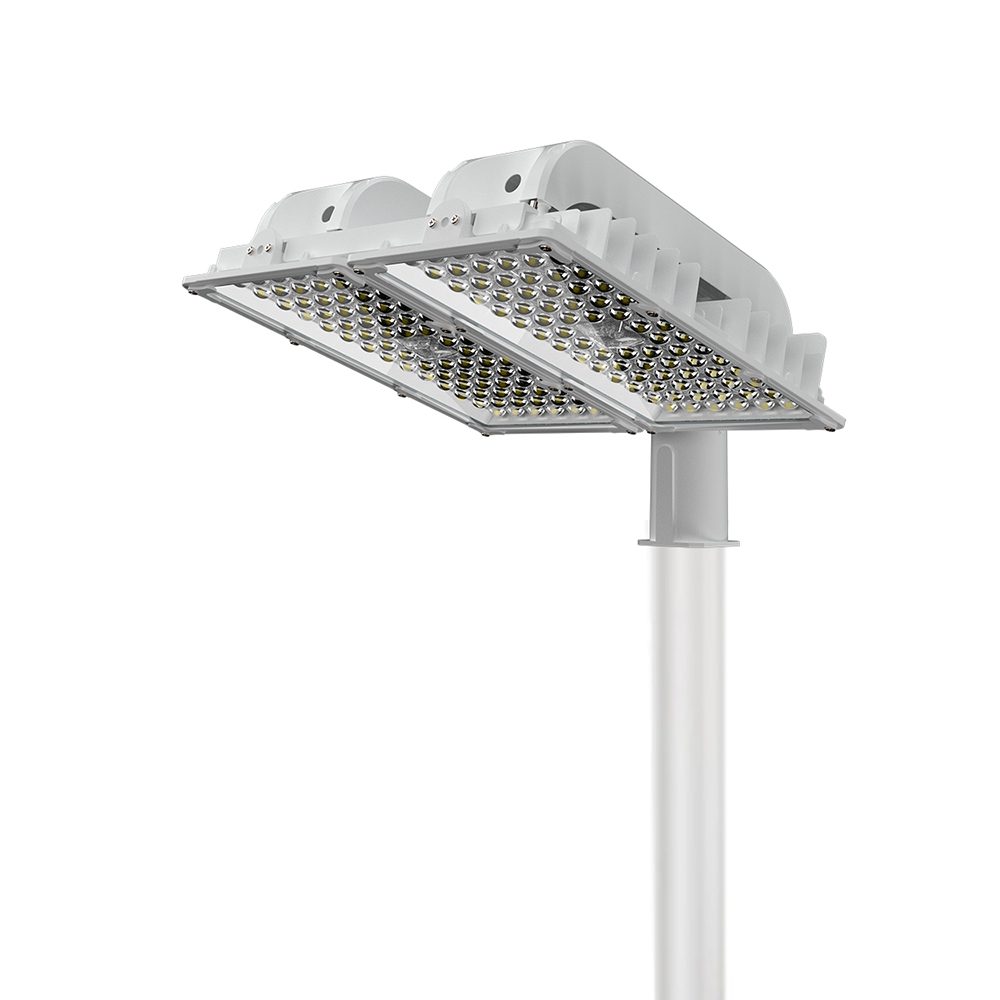
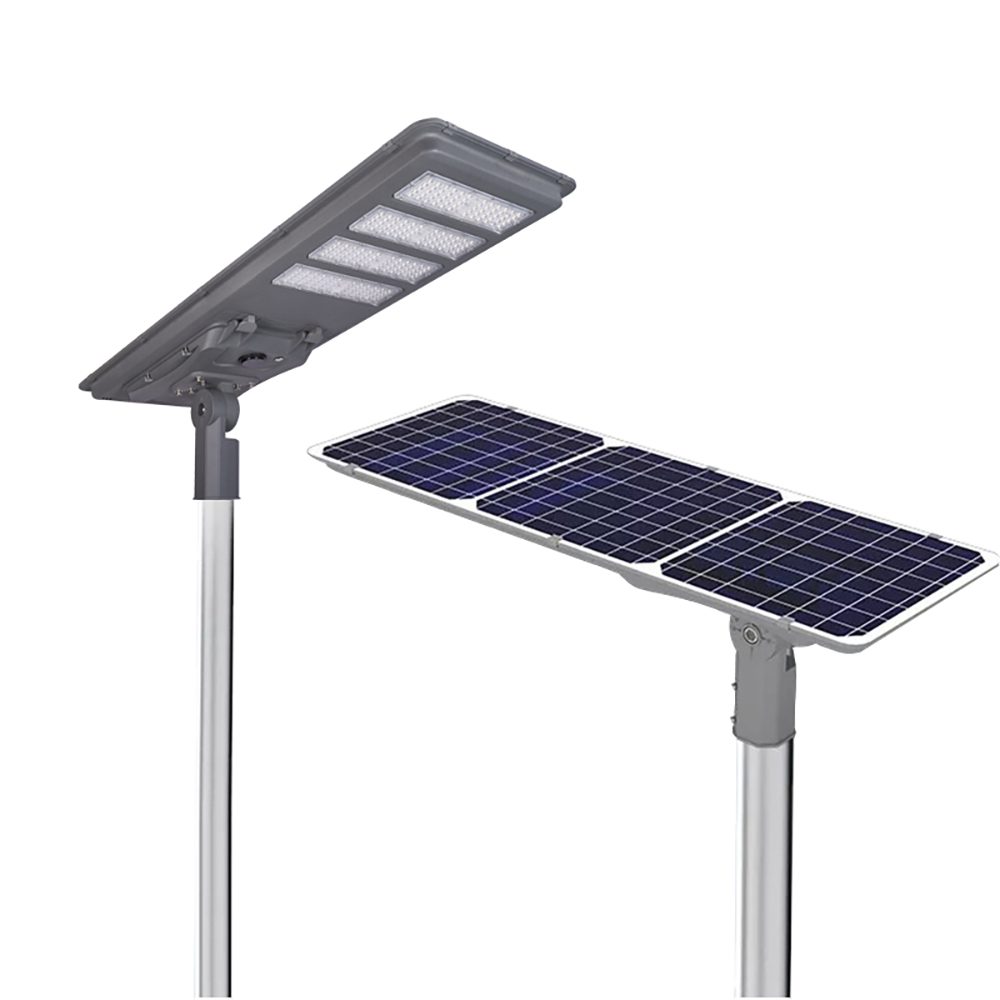

With the advancement of urban renewal and rural infrastructure, road lighting projects have raised stricter standards for lamp selection. Single and double overhang street lights are widely used municipal poles, which differ greatly in applicable road width, layout and traffic volume. Design and construction teams shall select lamps based on actual road conditions to avoid lighting blind spots and control engineering costs.
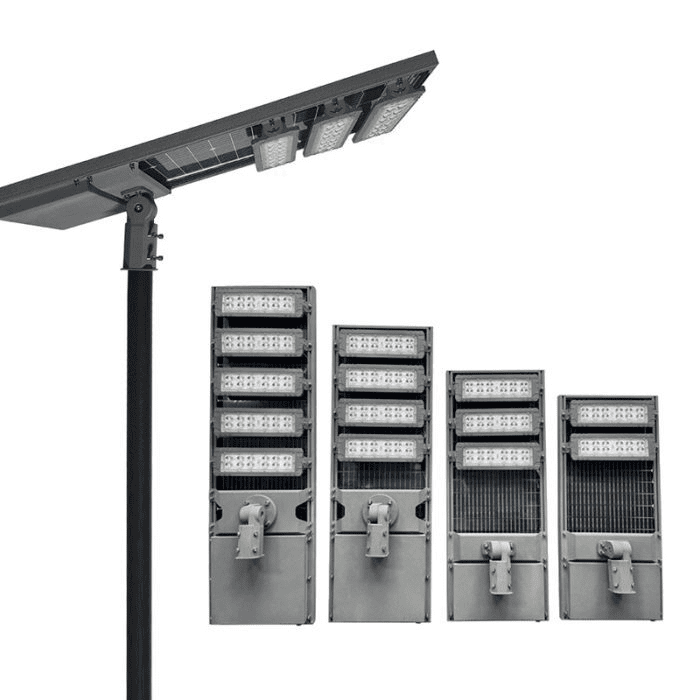
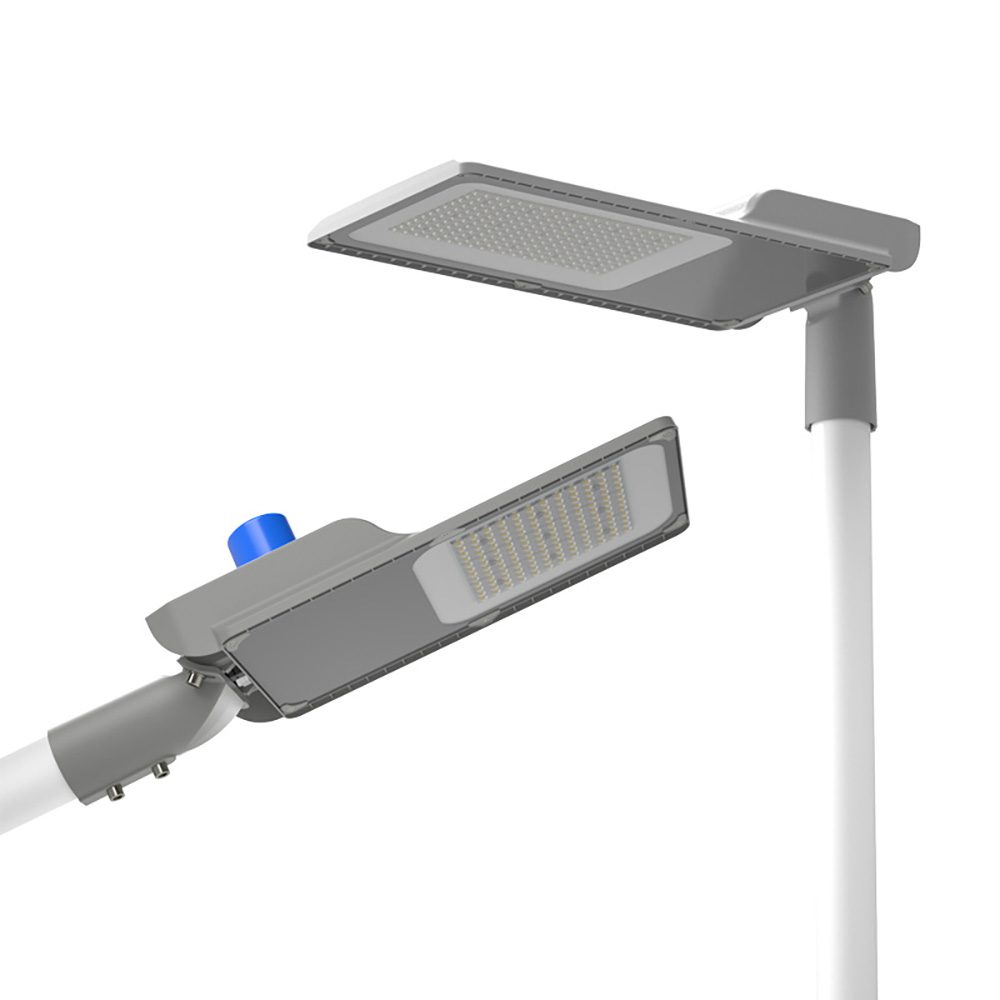
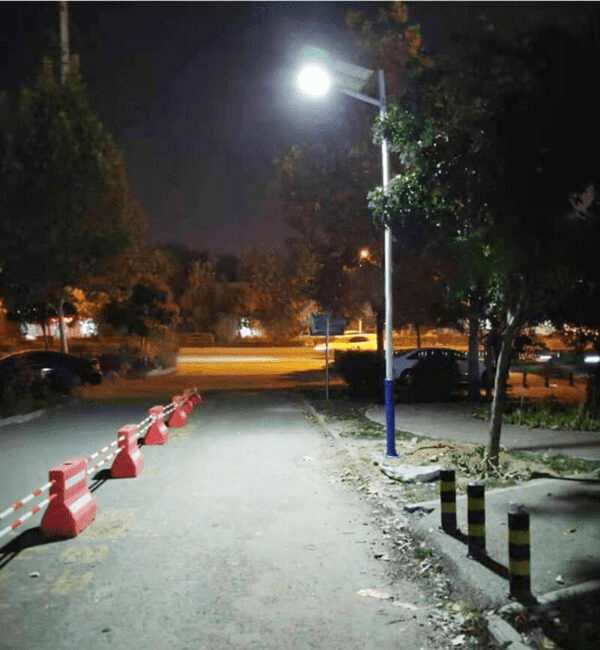
Single overhang street lights have only one lamp arm, with poles arranged along one road edge, suitable for narrow roads of 8 to 12 meters. They are commonly installed on urban branch roads, residential internal roads, park walkways, single-lane rural highways, factory secondary roads and riverside trails. Such roads carry light pedestrian and vehicle flow, and single-side lighting can fully cover the pavement. The poles are lightweight with simple foundation construction without occupying central greenbelts, making them ideal for old community renovation and rural lighting. Maintenance only targets one lamp head to cut long-term costs. However, their limited coverage will form large dark zones on the opposite side if used on wide two-way roads.
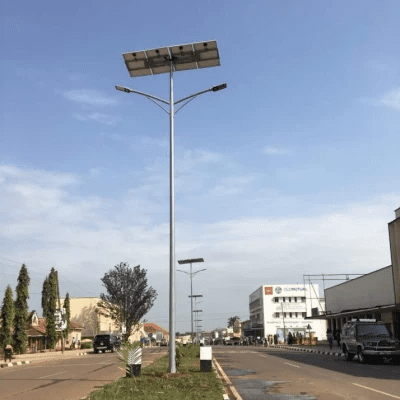
Double overhang street lights are fitted with two symmetrical arms, mostly installed in road median greenbelts. One pole lights two-way lanes and sidewalks, fitting wide roads over 14 meters with four or more lanes. They are mainly deployed on urban arterial roads, expressways, national and provincial highways, interchange ramps, industrial park main roads, landscape avenues and large traffic squares. These roads feature heavy fast traffic and demand even illuminance; symmetrical double overhang layout removes light gaps and improves night travel safety, also applied at crossroads and widened auxiliary roads. Yet they bear larger load, requiring higher-standard poles and foundations, leading to higher procurement and construction expenses.
Lighting designers point out neither type outperforms the other. Narrow roads without median strips adopt single overhang lights, while wide multi-lane arterial roads with isolation belts choose double overhang styles. With the popularization of smart street lights, both structures can be equipped with monitoring and intelligent dimming modules, and will be applied to different road sections for a long time.