
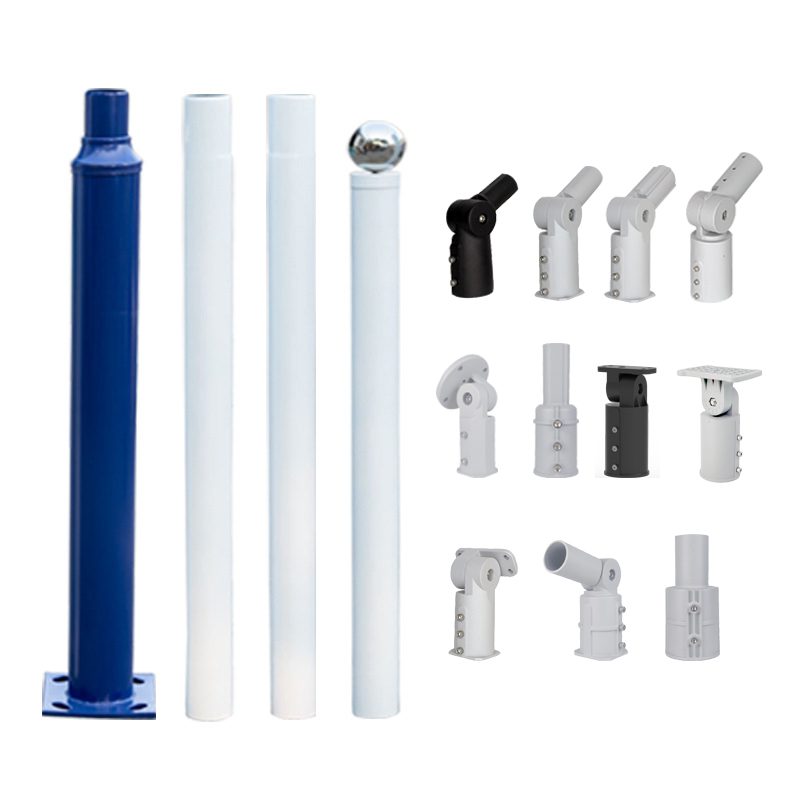
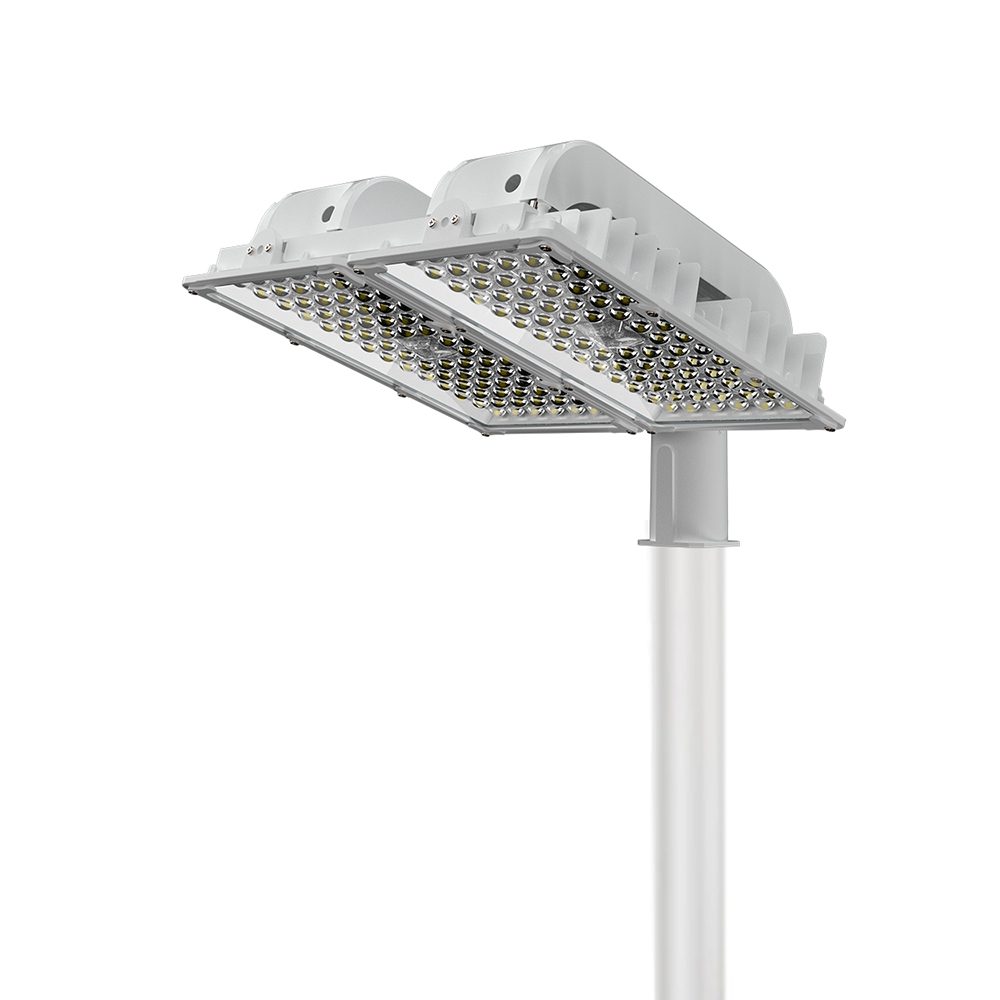
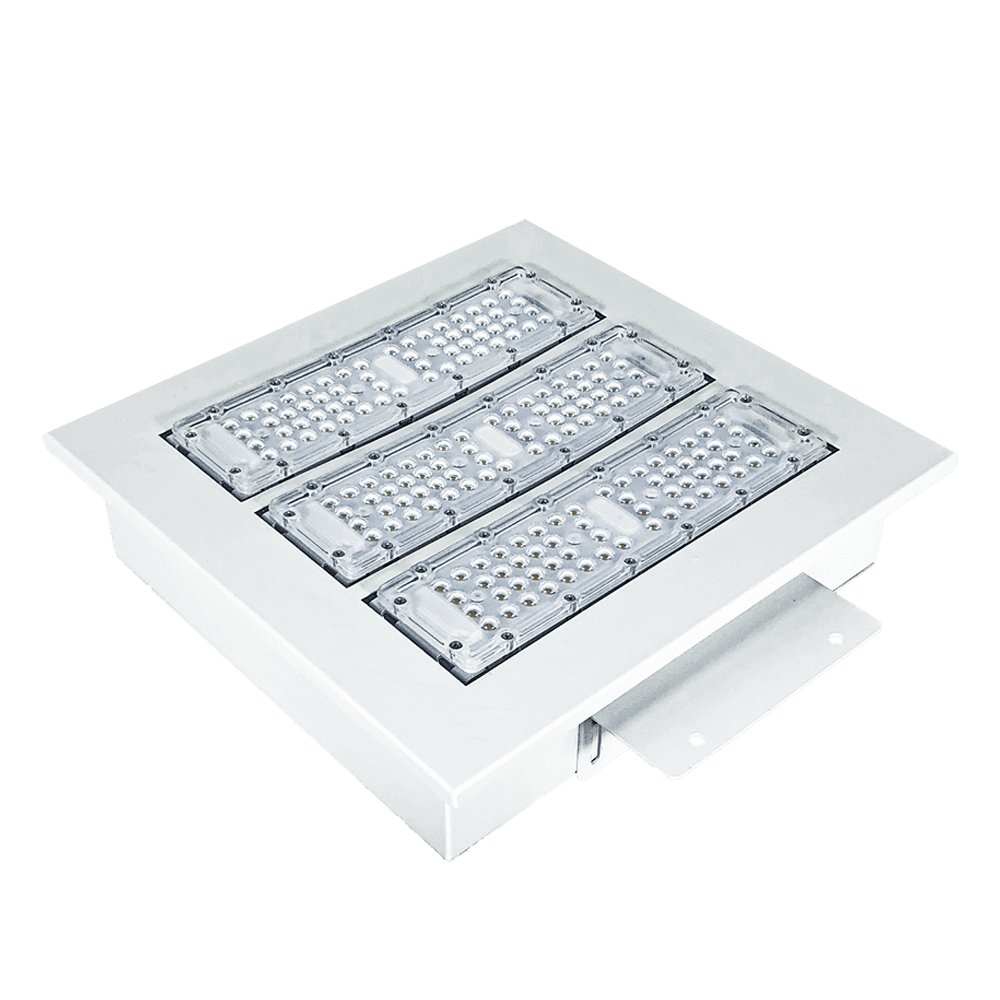
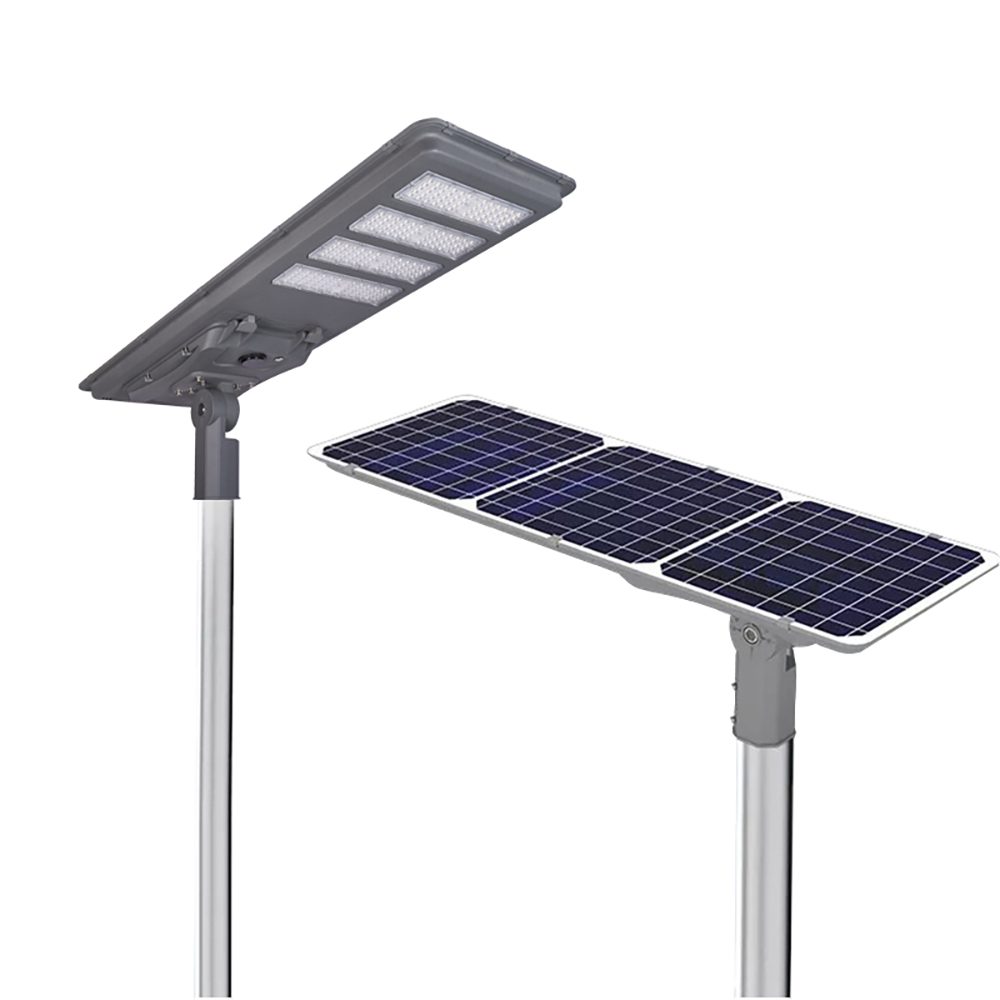

As a professional lighting manufacturer, we know that the optical lens is a core component of LED luminaires, directly determining light efficiency, durability, and application performance. The mainstream lens materials in the industry today are PMMA, PC, optical glass, and silicone, each with distinct properties suitable for different lighting scenarios.
1. PMMA (Acrylic) Lenses – Cost-Effective for Indoor Use
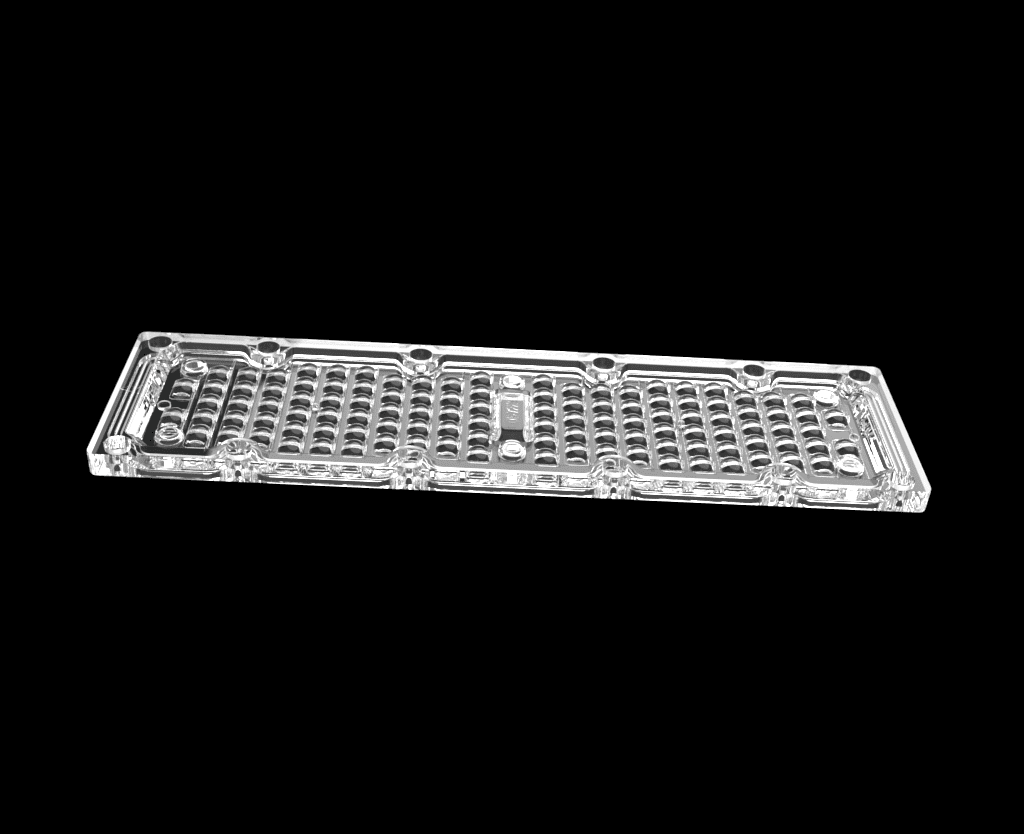
PMMA, commonly known as acrylic, is the most widely used material for indoor lighting. It offers a light transmittance of 92%–93%, with excellent optical clarity and stable refractive index, supporting high light output efficiency. It is easy to mold into complex shapes at a relatively low cost, with a smooth surface that is simple to clean.
However, PMMA has limited temperature resistance (not recommended above 80°C long-term), poor impact resistance, and insufficient weatherability. It may yellow or become brittle after 1–3 years under outdoor UV exposure. It is ideal for indoor downlights, panel lights, and display lighting where temperature and weather are mild.
2. PC (Polycarbonate) Lenses – Durable Choice for Outdoor Lighting
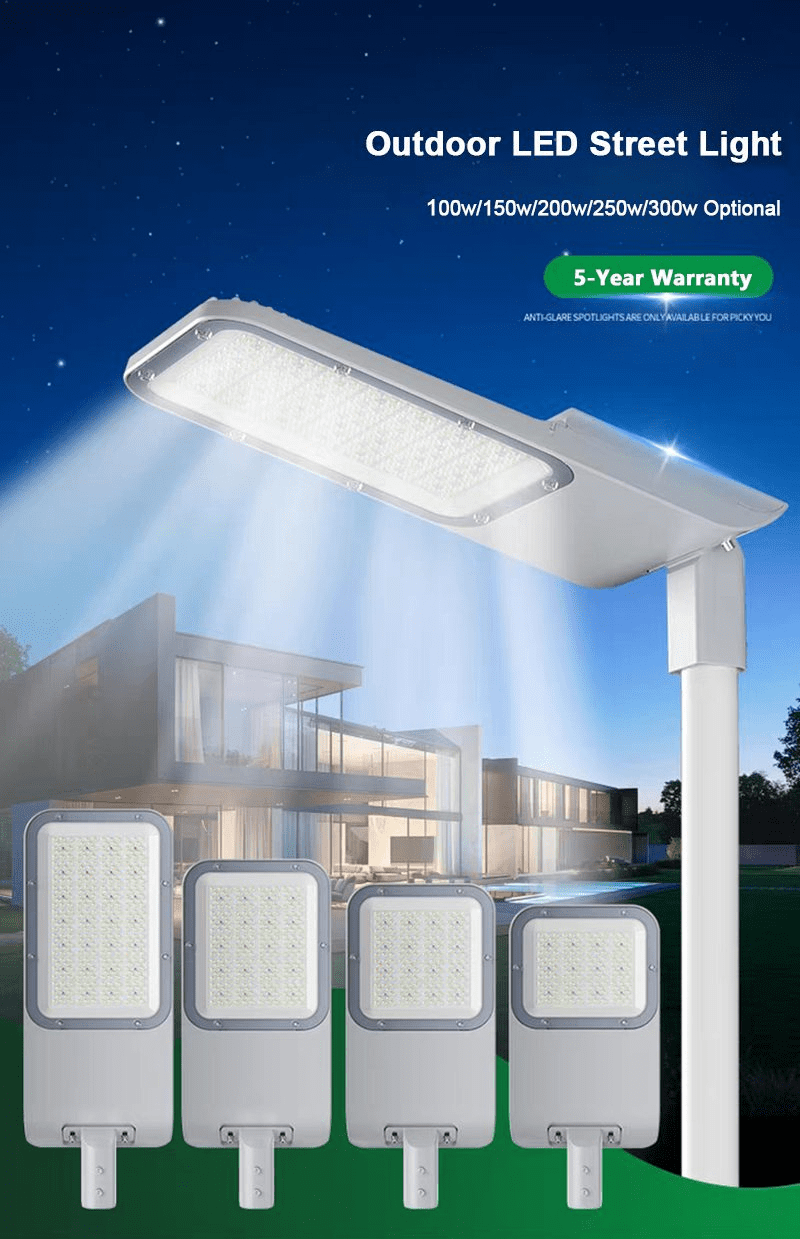
PC features outstanding impact resistance, high temperature resistance up to 120°C, and good flame-retardant performance. With UV stabilizers, it resists yellowing for 5–10 years outdoors, making it highly reliable in harsh environments. Its light transmittance is about 89%–90%.
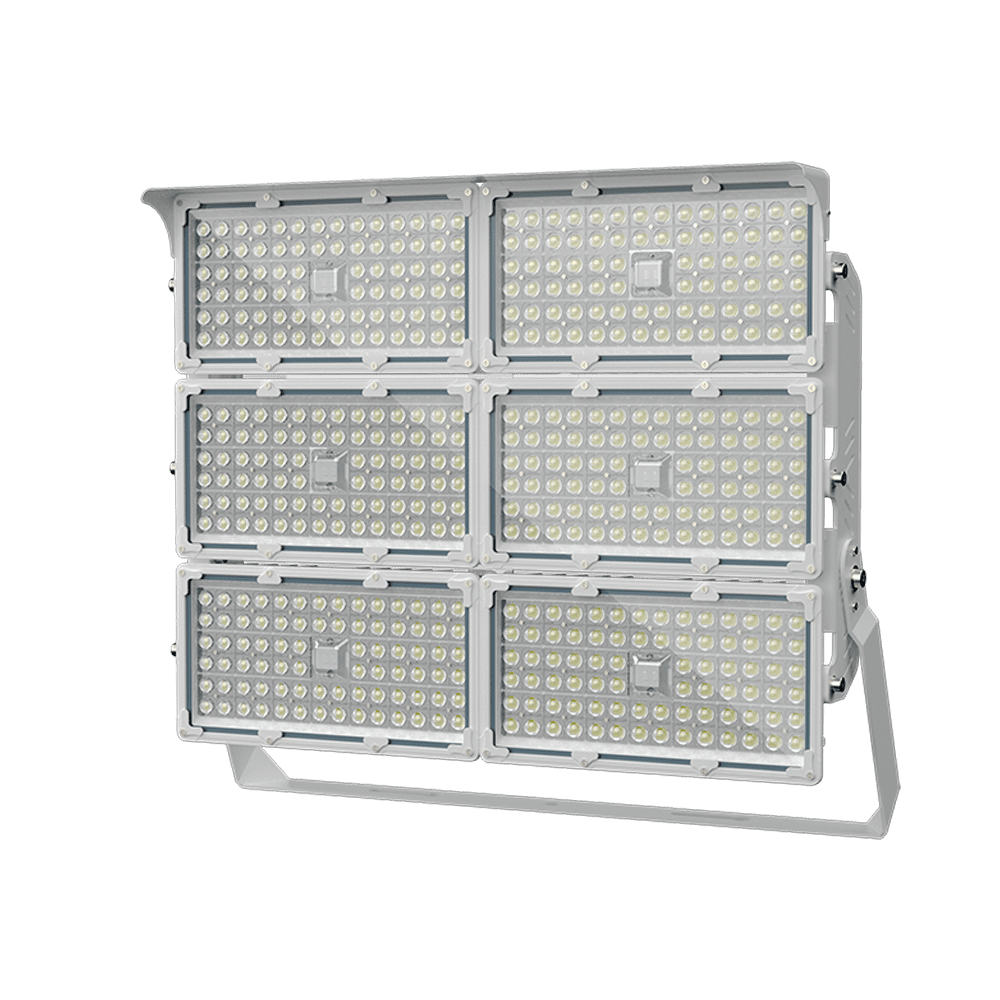
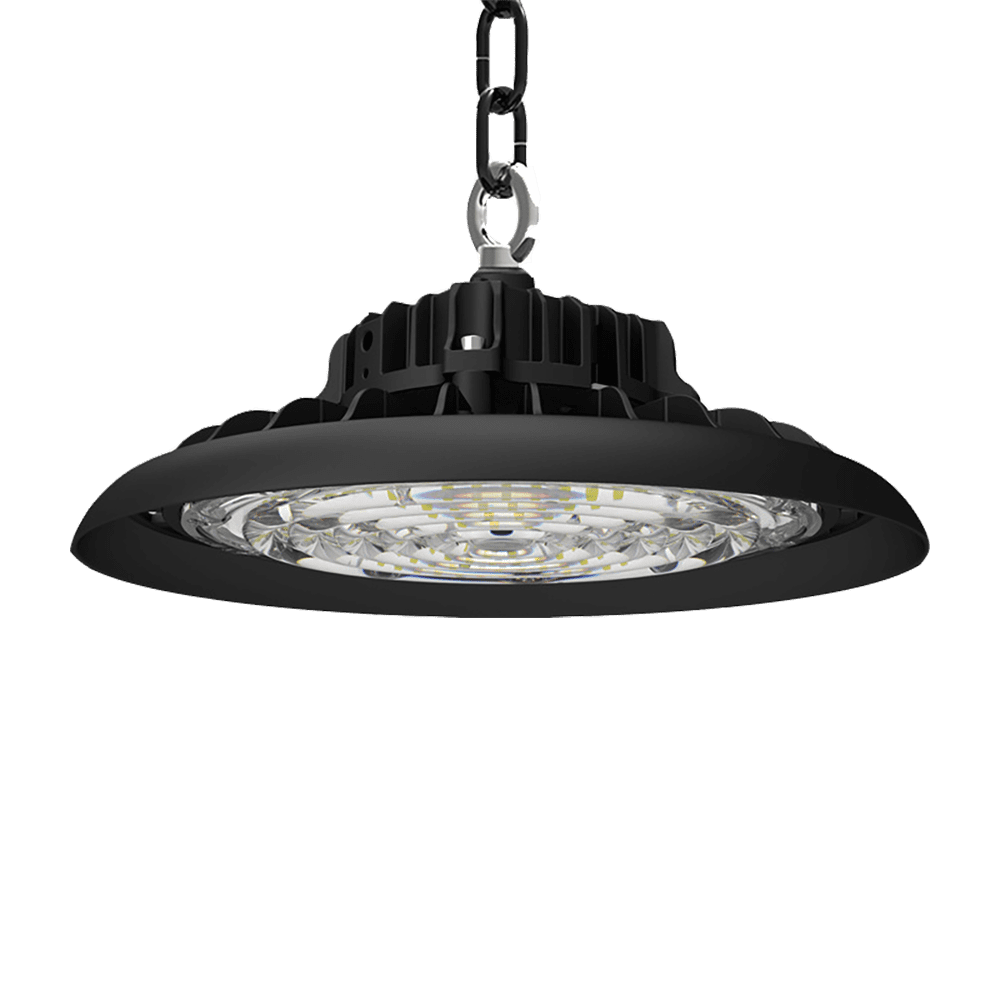
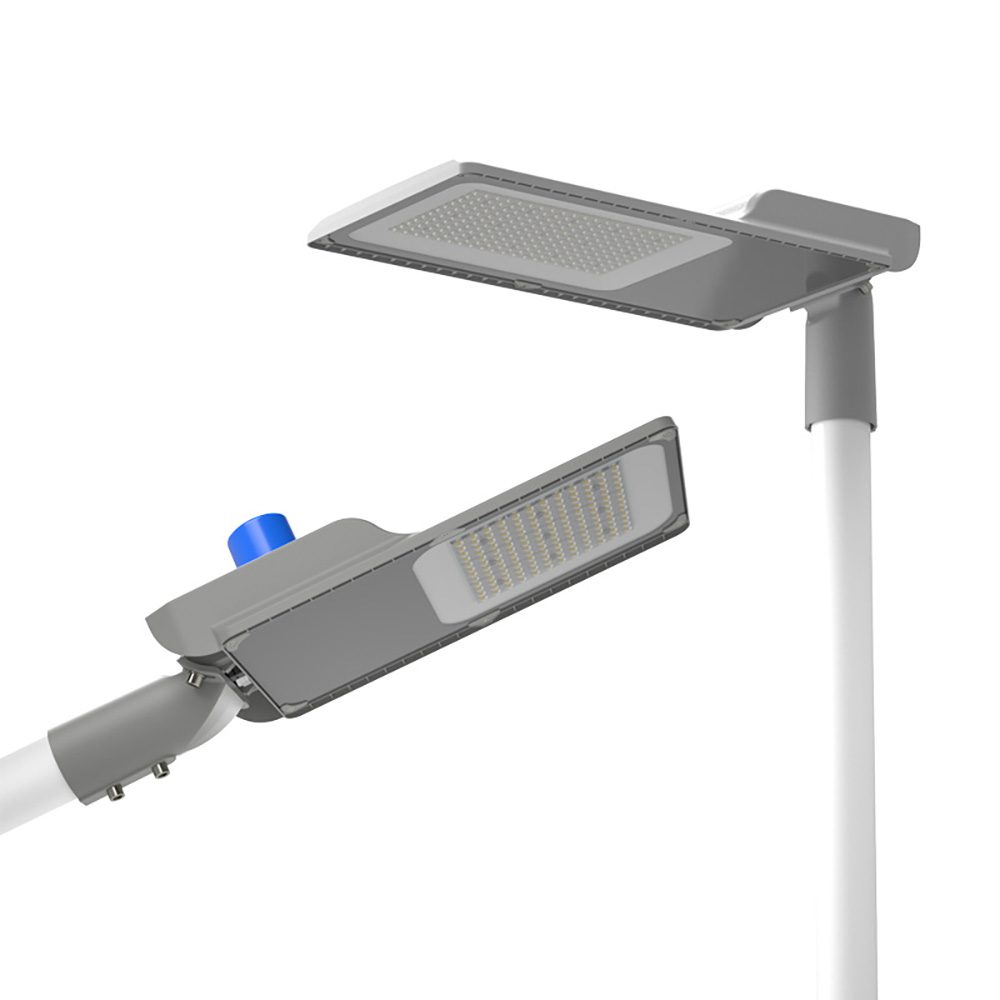
PC is more expensive than PMMA and has lower surface hardness, so hard-coating treatment is often required. It is the preferred material for floodlights, street lights, high bay lights, stadium lights, and other outdoor or high-power fixtures.
3.Optical Glass Lenses – Premium Performance for Professional Lighting
Optical glass delivers the highest light transmittance, reaching 95%–97%, with exceptional thermal stability (withstanding over 300°C), zero yellowing, and excellent corrosion resistance. It enables precise light distribution and uniform illumination for high-end applications.
Challenges include high cost, heavy weight, brittleness, and limited moldability into complex structures. It is mainly used in high-end stadium lighting, medical lamps, stage lighting, and precision optical systems.
4. Silicone Lenses – Flexible & High-Temperature Resistant
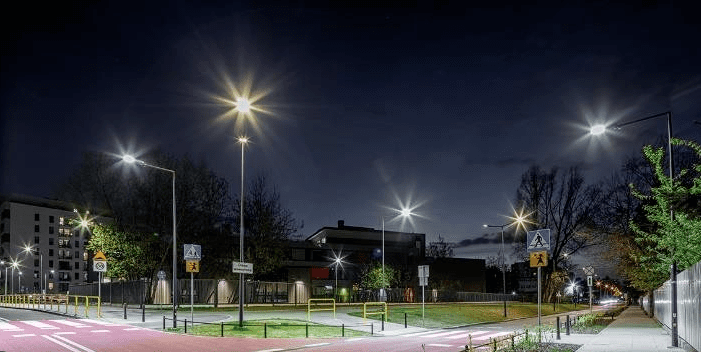
Optical silicone is a flexible material with an operating temperature range from -40°C to 200°C, excellent vibration resistance, and compatibility with reflow soldering. It offers high transmittance and low yellowing risk.
Due to low hardness and easy scratching, it is mainly used for small-size lenses in COB modules and high-power LED
5. Conclusion
For cost-sensitive indoor lighting, PMMA is optimal. For outdoor and high-durability applications such as stadium lights, PC is the best choice. For professional high-performance lighting, optical glass is superior. For LED packaging and high-temperature environments, silicone is suitable.
As a trusted manufacturer, we use imported optical-grade materials and precision molding technology to ensure stable light distribution, long service life, and reliable performance for every lens, helping our customers build competitive and high-quality lighting products.