

Professional and compliant lighting systems are essential for night operation and competition of tennis courts. Currently, the industry generally follows the ITF (International Tennis Federation) standards and JGJ 153-2016 《Lighting Design and Testing Standards for Sports Venues for design》. LED luminaires have become the mainstream choice for tennis court lighting due to their high efficiency, long lifespan and stable performance.
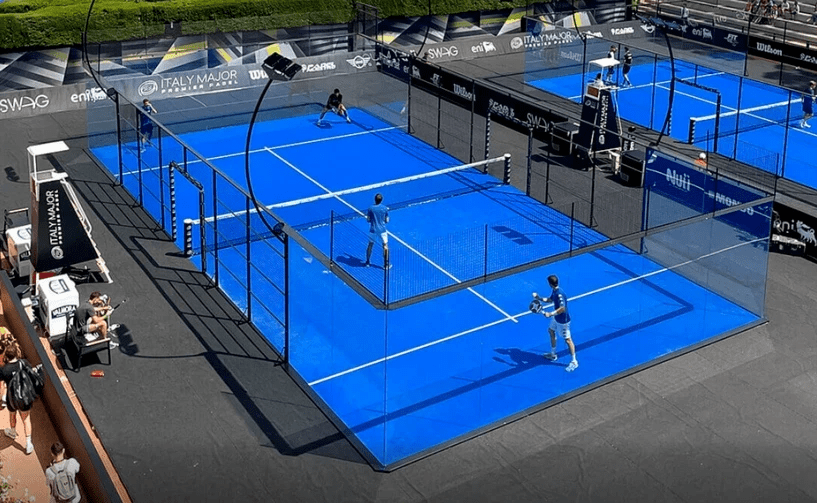
1.Core Lighting Standards for Tennis Courts
Tennis court lighting must meet four key indicators: illuminance, uniformity, glare control and color temperature, with clear grading for different scenarios:
Illuminance: 200–300 lux for recreational courts; 300–500 lux for amateur training and club matches; 500–750 lux for professional training; and over 1000 lux for TV-broadcast competitions.
Uniformity: The ratio of minimum to average illuminance should be ≥0.6 for amateur courts and ≥0.7 for professional courts, avoiding brightness differences that affect ball trajectory judgment.
Glare control: Glare Rating (GR) ≤50 to prevent harsh glare and ensure visual comfort for players. Color temperature and color rendering: Color temperature between 4000K–6500K (5700K preferred for broadcasts); Color Rendering Index (CRI) Ra≥80, and Ra≥90 for broadcast venues to restore true colors of the ball and court surface.
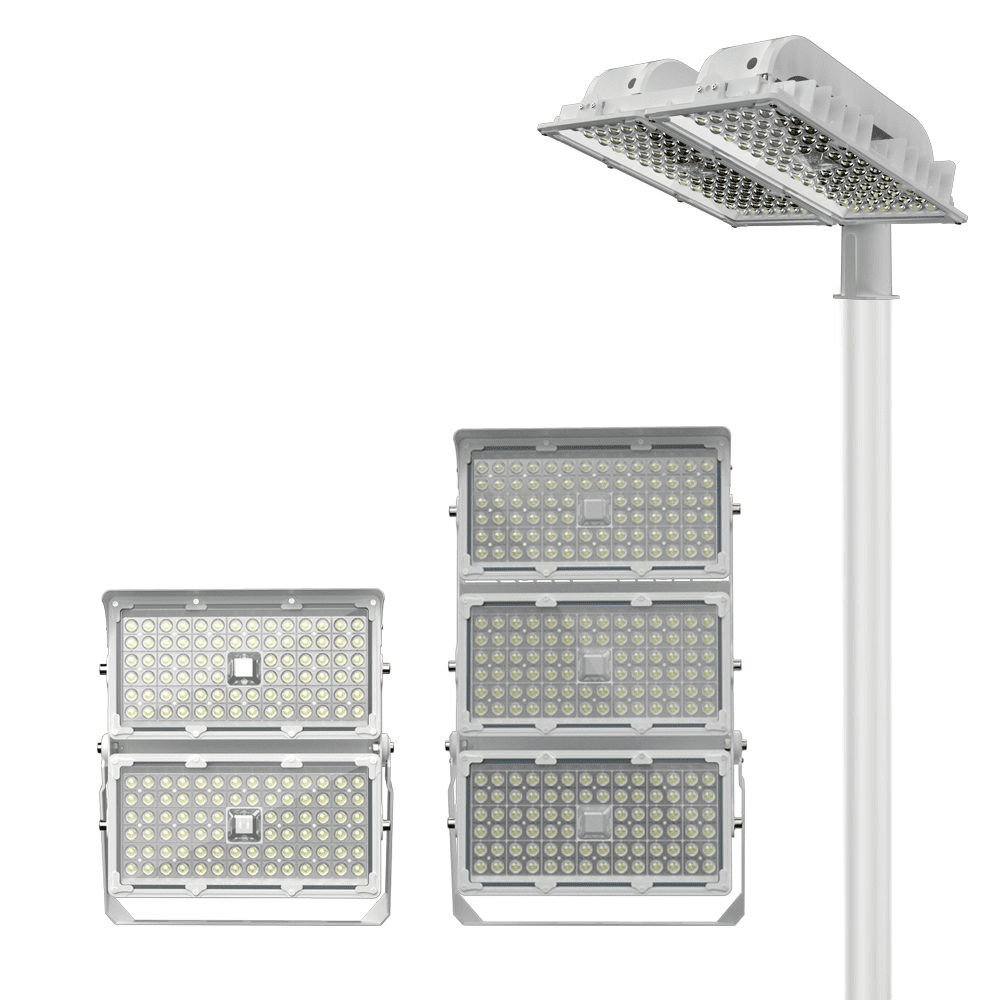
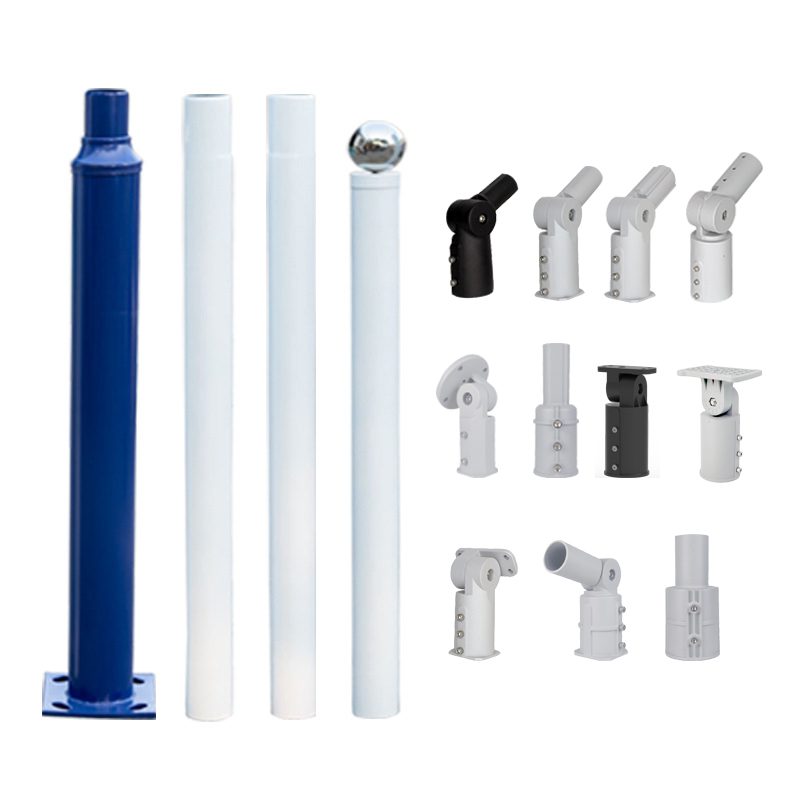
Layout specification: For outdoor courts, light poles are 8–12 meters high, symmetrically arranged on both sides of the court, avoiding the four corners, with precise projection angles to reduce shadows and light spill.
2.Key Points for Selecting LED Court Luminaires
Light efficacy and power matching
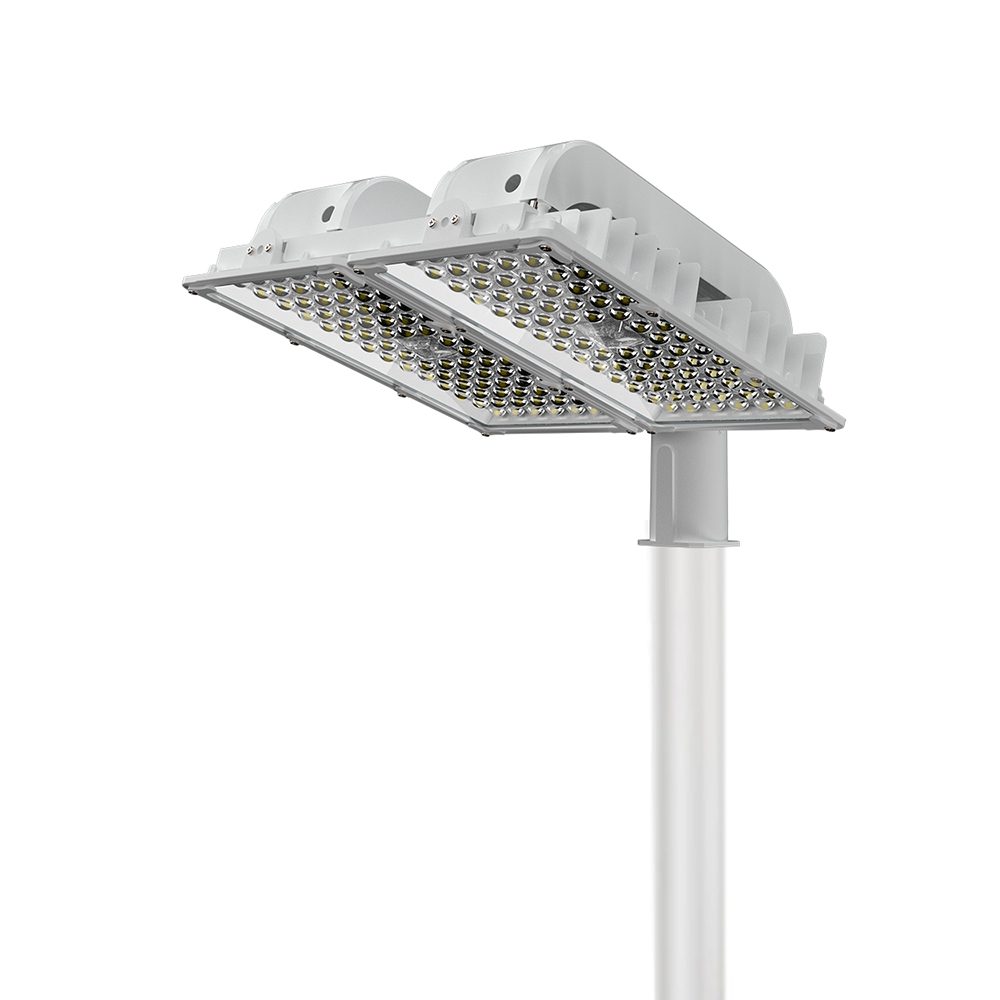
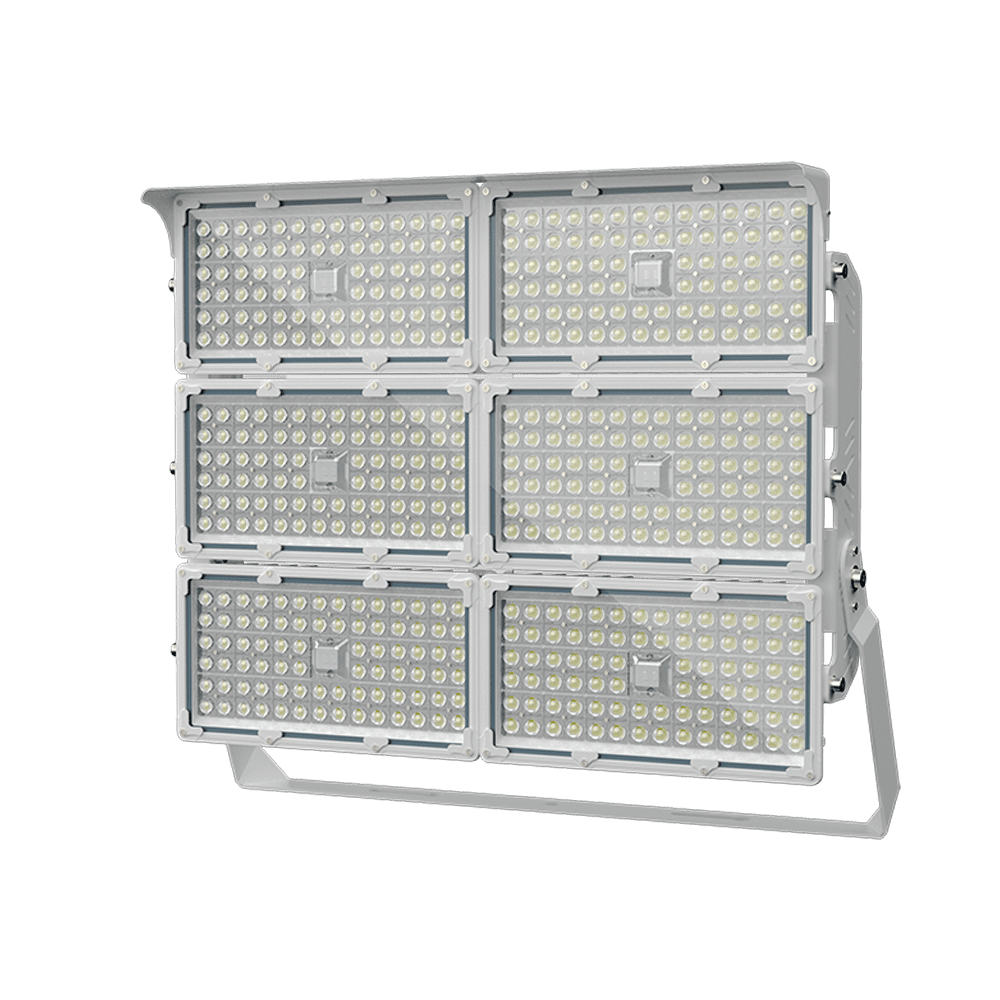
Prioritize products with luminous efficacy ≥160 lm/W, rather than wattage alone. For a standard doubles court, 8–10 sets of 150–200W luminaires are suitable for amateur use, while 250–300W models are recommended for professional venues to meet illuminance requirements.
Anti-glare and light distribution design
Choose professional polarized luminaires with PC anti-glare lenses and deep baffles, adopting T3 asymmetric light distribution to project light accurately onto the court and reduce lateral glare.
Protection and durability
Outdoor luminaires shall reach IP66 or higher for water and dust resistance, adapting to high temperature, humidity and heavy rain. The lamp body shall meet anti-corrosion standards, with a service life of ≥50,000 hours and a warranty of 3–5 years to lower maintenance costs.
Color temperature and color rendering
Neutral white light of 4000K–5000K is suitable for training and recreation; 5500K–5700K is used for professional competitions and broadcasts, close to natural light for better vision and broadcast quality.
3. Summary of Selection and Installation
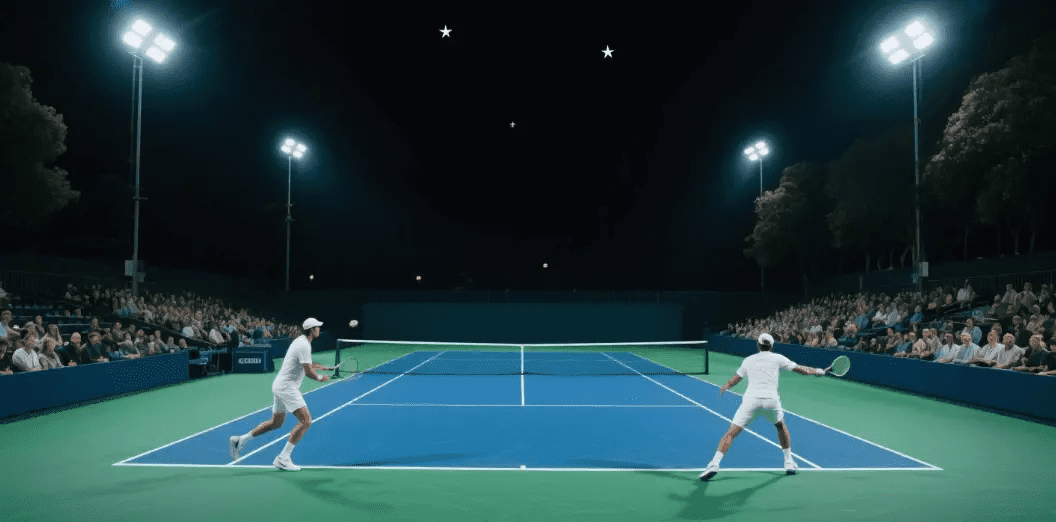
Tennis court lighting should first define the usage level, then select luminaires in accordance with standards and adopt scientific layout. LED luminaires save over 50% energy and last 3–5 times longer than traditional lamps, enabling cost recovery within 2–3 years.
When purchasing, give priority to professional sports lighting brands, verify light efficacy, anti-glare performance, protection rating and color temperature. After installation, test illuminance, uniformity and glare to ensure compliance with ITF and national standards, creating an excellent sports environment.