

As high-frequency public service sites, gas stations’ lighting affects nighttime visibility, customer experience, safety, surveillance effectiveness, and energy consumption. As a luminaires manufacturer, when supplying lighting solutions for gas stations you should design and select products systematically from the perspectives of lighting standards, requirements, fixture types and functions, color temperature, and application scenarios. The following summarizes key points based on industry norms and recent reports to support engineering design and product development.
1.Lighting standards and regulatory considerations
Gas station lighting must comply with national and local electrical, safety, and lighting standards. Common requirements include average illuminance for each area, minimum illuminance and uniformity (U0), color rendering (CRI), glare control, and explosion-proof / fire-safety regulations. Typical outdoor refueling areas require average illuminances ranging from several dozen to several hundred lux depending on function; convenience stores and cashier zones need higher illuminance and color rendering to ensure product recognition and secure transactions. In addition, fuel dispensing areas may require explosion-proof electrical equipment or isolation measures in accordance with risk zoning rules, and fixtures should meet appropriate ingress protection ratings (typically IP65 or higher).
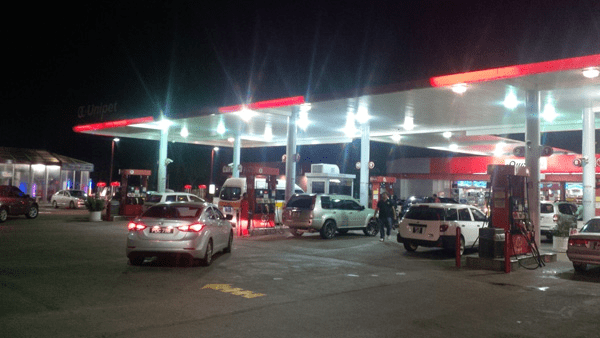
2.Lighting requirements and safety considerations
Safety is the primary objective for gas station lighting. Ensure no dark zones at pump islands, traffic lanes, entrances/exits and pedestrian paths to avoid visual misjudgement. Light sources should be designed for low glare (glare control metrics such as UGR or equivalent) to avoid impairing driver sightlines, and lighting must meet surveillance camera requirements—avoiding strong specular reflections or high-contrast regions that impair video recognition. Fixtures must meet explosion-proof, grounding, and protection standards; cable routing and distribution cabinets require robust protection and reliable grounding to minimize fire risk.
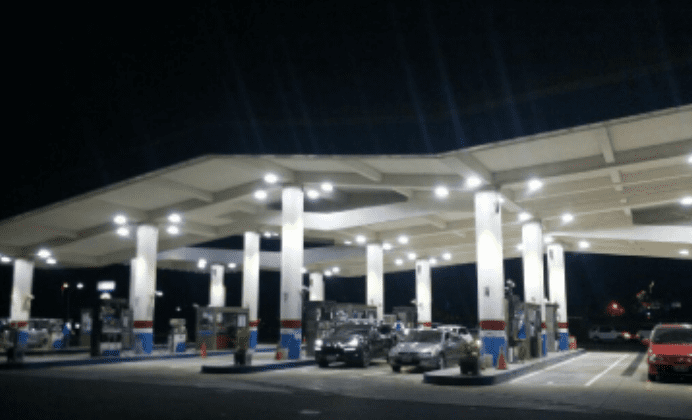
3.Types of lighting and functional zoning
Gas station lighting can be divided into task (functional) lighting and auxiliary/branding lighting:
Task lighting: includes pump island lighting, traffic lane and parking area lighting, interior lighting for convenience stores and cashier counters, and utility/underground tank room lighting. This category emphasizes uniformity, color rendering, and reliability—favoring high-efficiency, long-life LED modules and optics that ensure even illumination.
Auxiliary and branding lighting: used for signage, pylons, canopy and façade wash lighting to enhance brand recognition and nighttime appearance. These applications commonly use controllable color temperature or RGB/RGBW solutions to achieve visual impact and themed decorations.
4.Color temperature and CRI recommendations
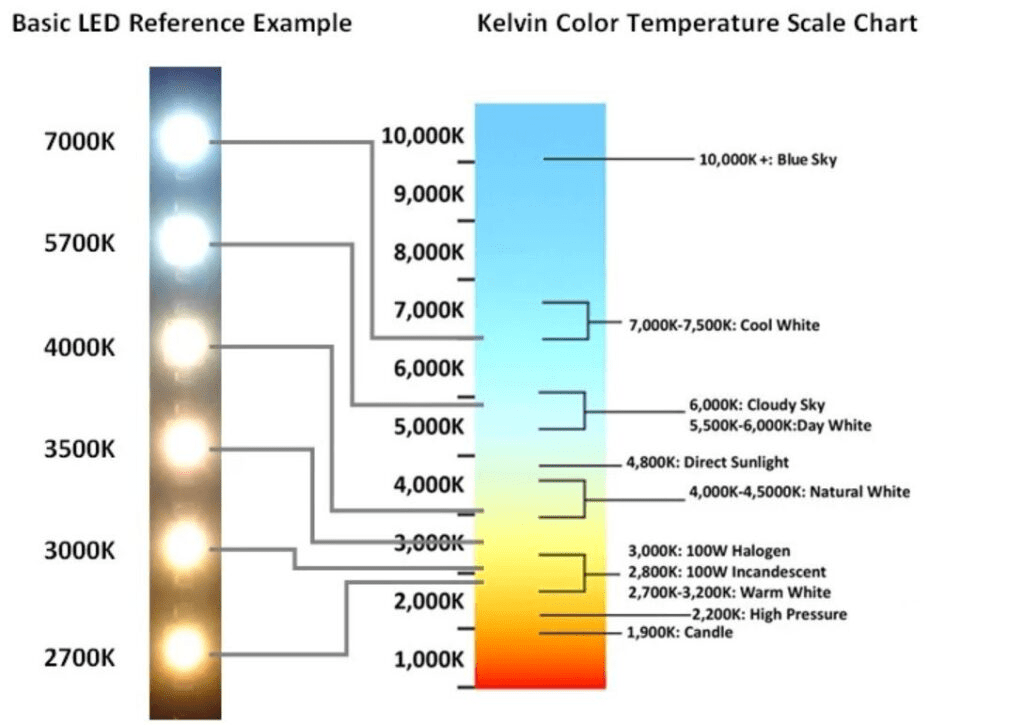
Select color temperature balancing visual comfort and function: pump islands and traffic areas are recommended to use neutral to cool white (4000K–5700K) to improve color recognition and alertness; convenience store interiors and rest areas may use neutral warm white (3000K–4000K) to enhance customer comfort. Recommended CRI is at least Ra70; critical color-identification areas (cashier, product shelves) should use Ra80 or higher. For brand signage and logo lighting where color fidelity matters, consider high-CRI options or customized color temperature solutions.
5.Optical design and light control
Optical design should aim to “cover pump islands, reduce spill light, and optimize surveillance.” Pump island fixtures should adopt directional or asymmetric optics to concentrate light on fueling areas and minimize light spill toward roads and nearby residences. Anti-glare structures and shielding baffles effectively reduce glare for approaching drivers. Signage and pylon lighting typically use wall-wash or point-source optics to emphasize focal elements. To support surveillance, avoid low-angle reflective materials and excessive illuminance gradients.
6.Product and installation recommendations
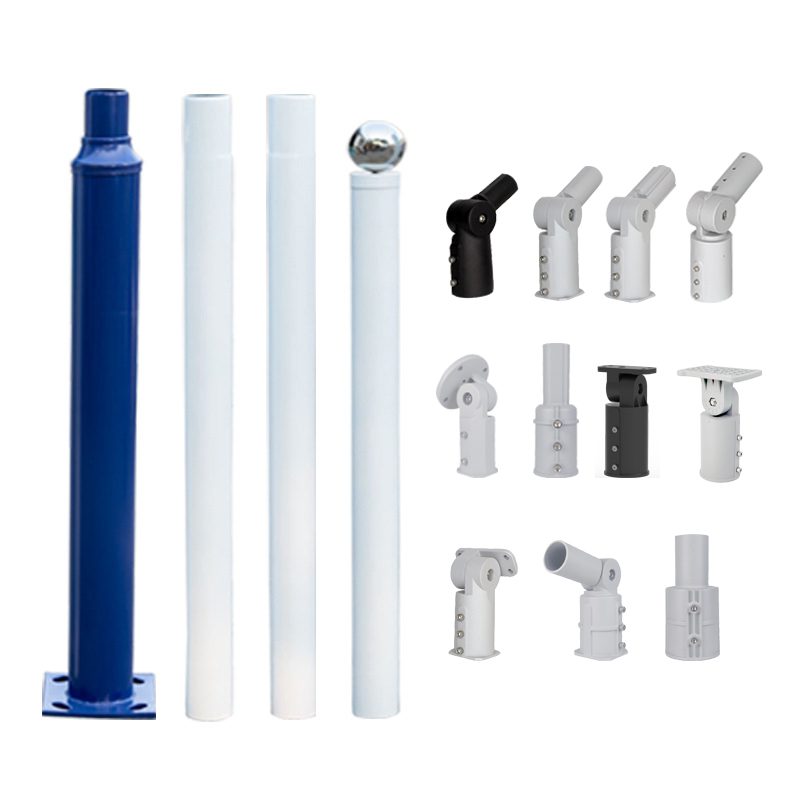
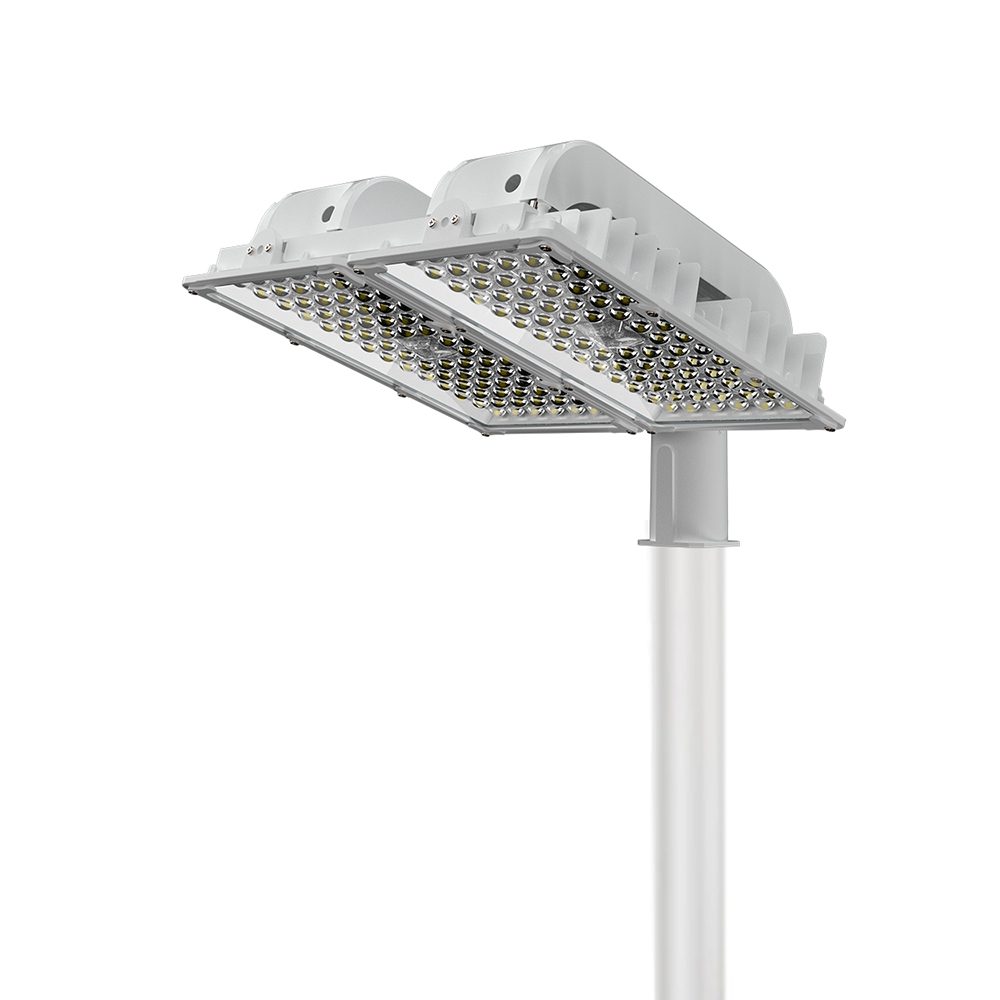
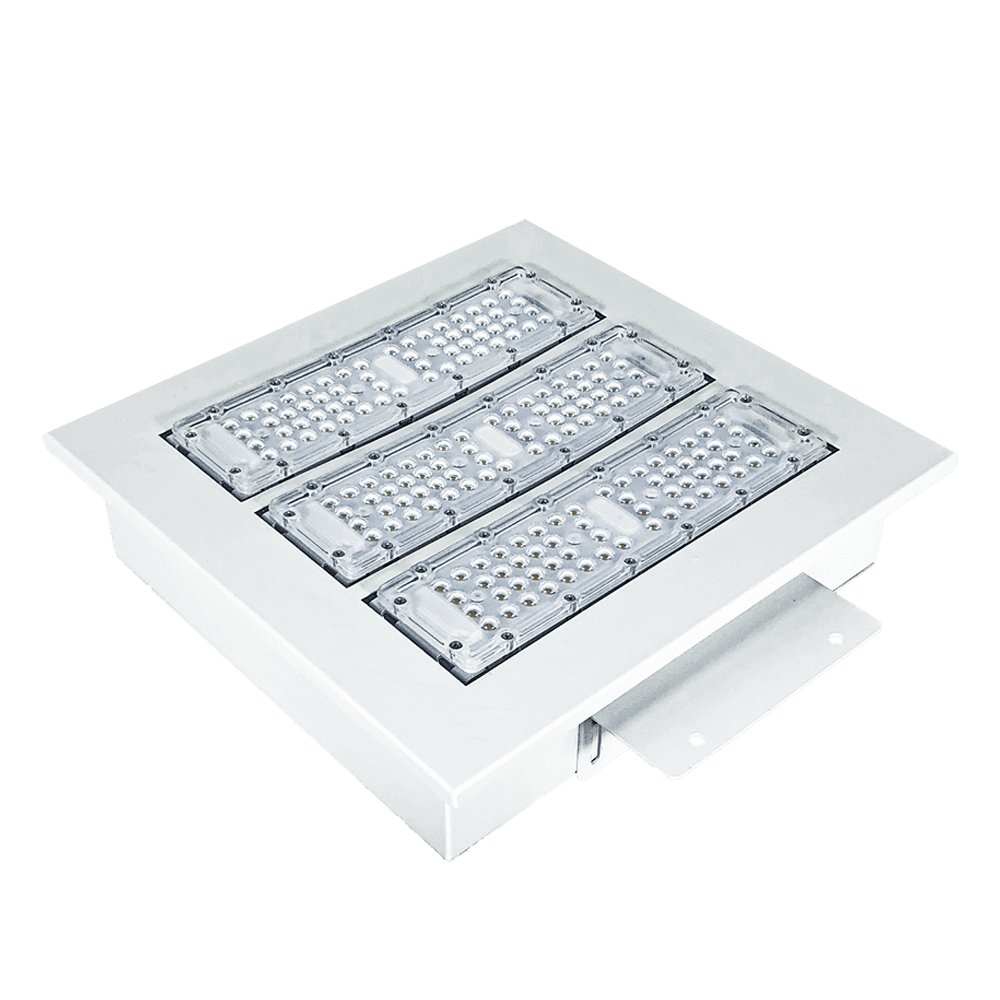
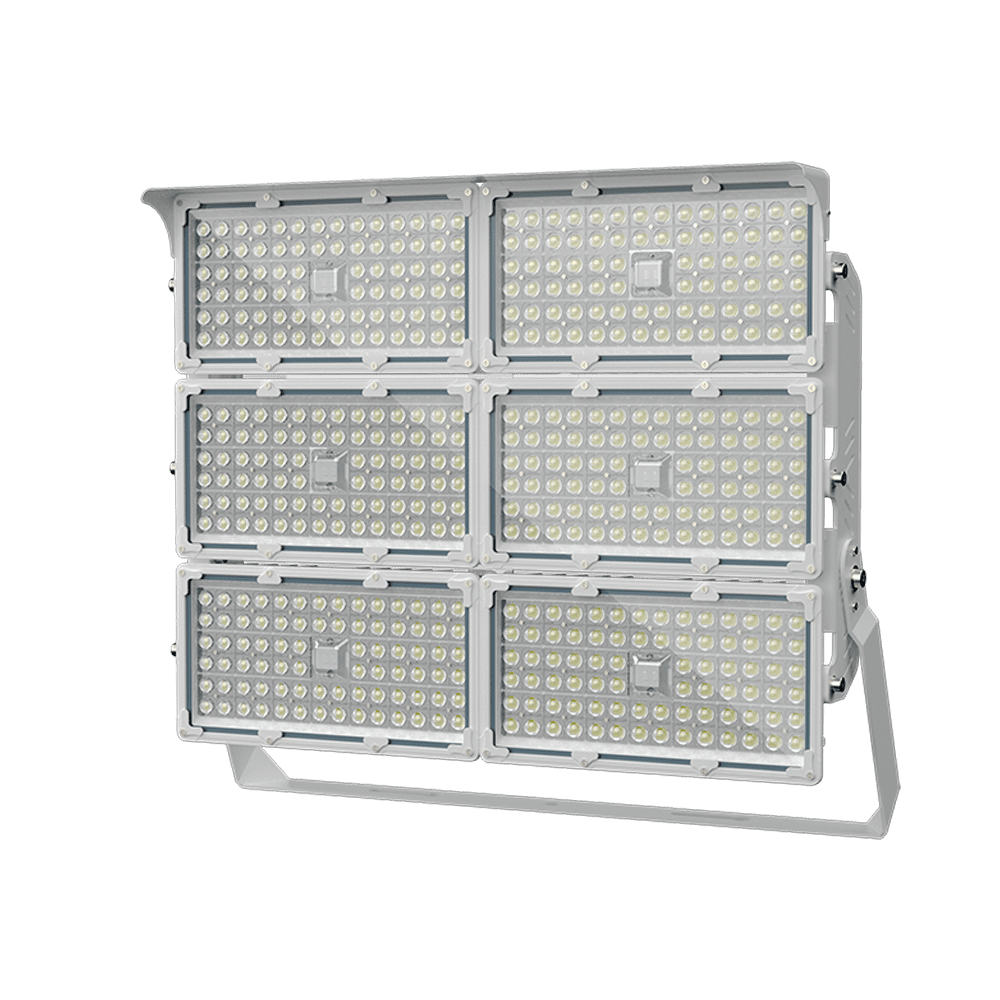
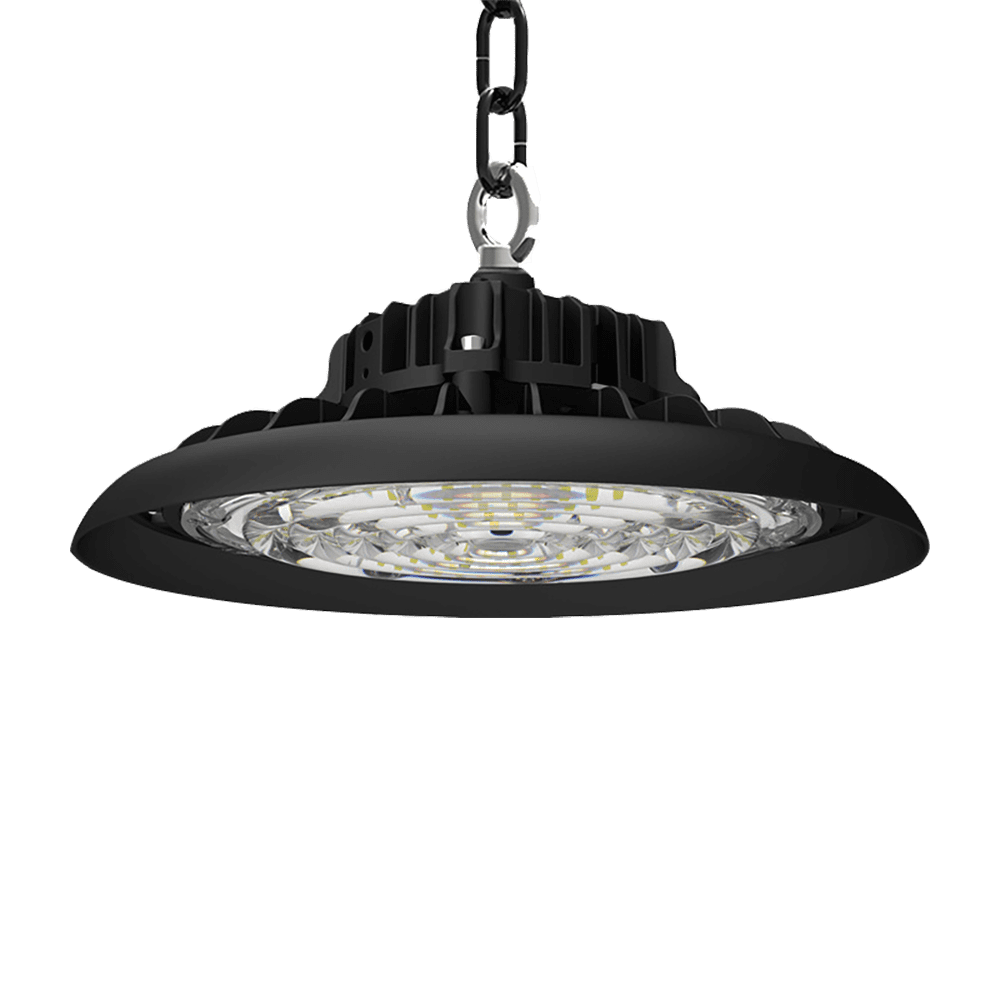
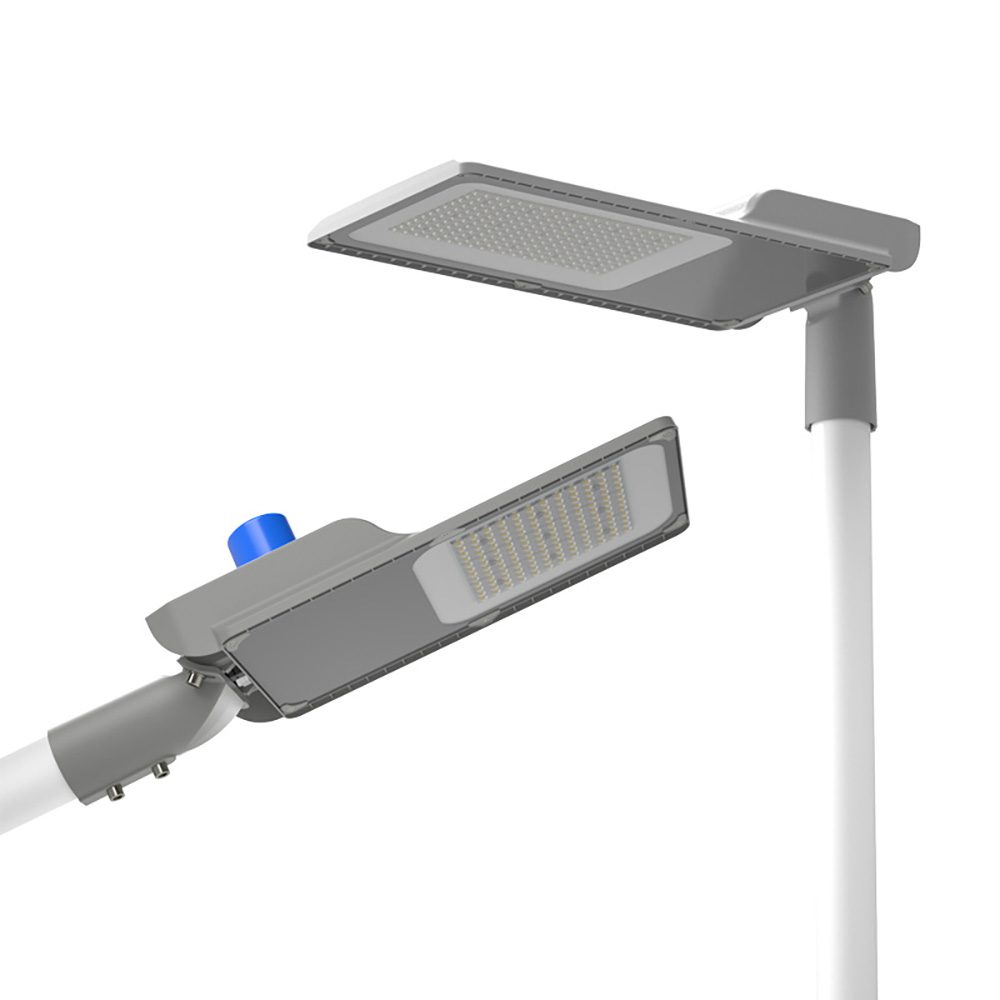
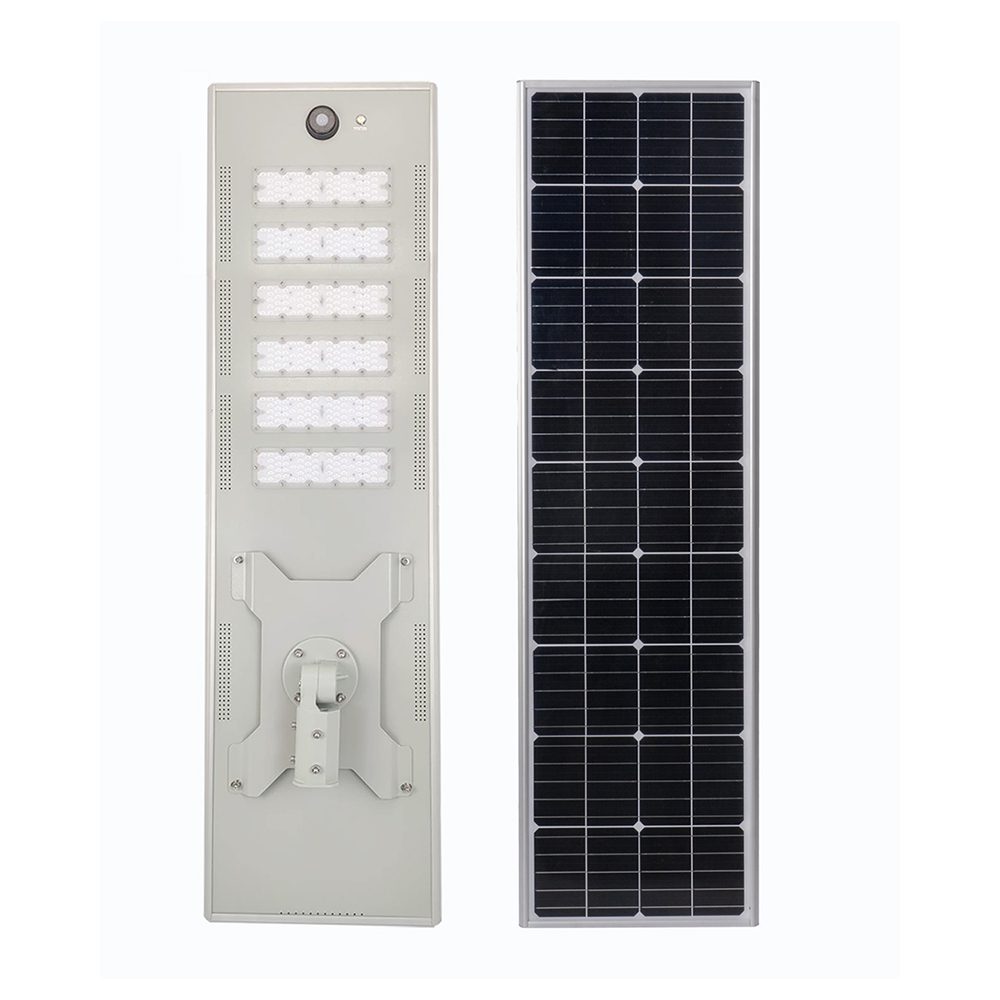
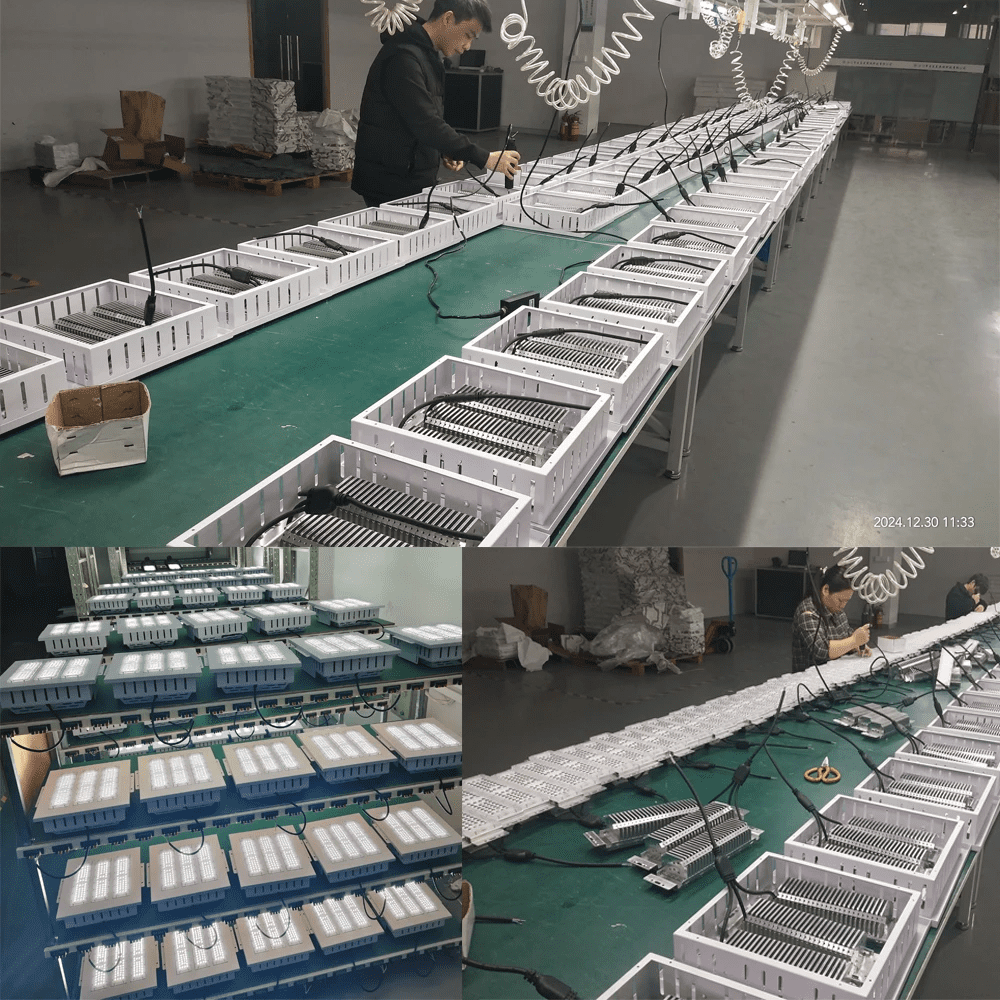
As a fixture manufacturer, provide a standardized yet customizable product line: pump-island anti-glare LED luminaires, dimmable signage lights, interior commercial fixtures, and explosion-protection components. Supply a complete technical support package (IES files, photometric curves, mounting brackets, wiring diagrams, and maintenance guides), and offer on-site illuminance simulation and pilot installation services to help operators validate designs and meet local approval requirements.
Gas station lighting design must balance safety, energy efficiency, and visual experience. In product development and project collaboration, manufacturers should strictly follow lighting standards, emphasize reliable thermal management and ingress protection, and provide flexible control solutions to deliver lighting systems that are both safe and cost-effective for gas station environments.