

Sports lighting is a critical element for ensuring fair and safe competition and enhancing the spectator experience. Whether for indoor or outdoor venues, lighting design must follow strict standards and requirements. This article explains the important metrics of sports lighting and provides a professional guide for selecting stadium/facility lights.
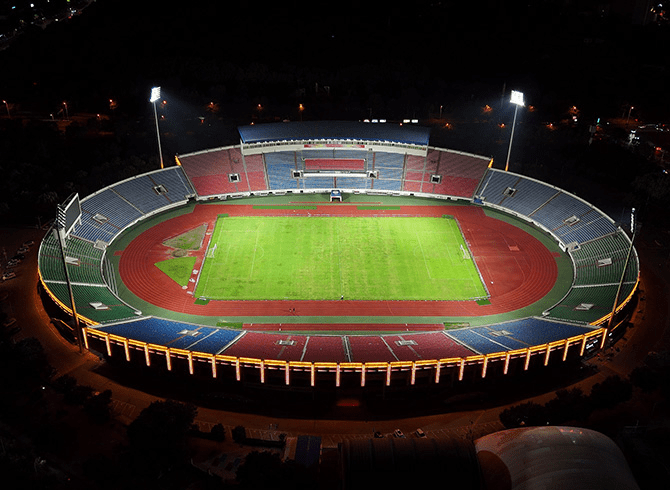
1. Core Metrics of Sports Lighting
1.1 Illuminance: This is the basic metric for measuring how bright a playing surface is, expressed in lux (lx). Different sports and competition levels require different illuminance. Recreational or training facilities may need 200–300 lx, while professional competition venues (e.g., football, basketball, badminton) require higher levels—typically 500 lx to 1,000 lx or more, and up to 2,000 lx+ for broadcast-level events. Vertical illuminance is also important because it affects athletes’ visibility of airborne objects (e.g., shuttlecock, ball)
1.2 Uniformity: Uniformity describes how evenly illuminance is distributed across the playing surface (commonly expressed as U0 or Umin/average). Good uniformity prevents bright spots and dark zones and ensures consistent visual perception across the court, which is crucial for judging ball trajectory, distance and speed. Professional venues typically require uniformity not less than 0.7.
1.3 Color Rendering Index (CRI): CRI measures a light source’s ability to render object colors accurately. High CRI (generally ≥80; broadcast-level requirements often ≥90) ensures true color perception of the ball, uniforms and field markings, improving athletes’ performance and the viewing experience.
1.4 Correlated Color Temperature (CCT): Measured in kelvin (K), CCT describes the perceived color of light. For most sports venues, neutral to cool white (approximately 4000K–6500K) is recommended to simulate daylight, increase visibility, reduce eye fatigue, and help cameras capture richer color reproduction.
1.5 Glare control: Glare is a visual discomfort or reduced object visibility caused by inappropriate luminance distribution or extreme brightness contrast. Poor glare control can impair athlete performance, increase injury risk, and reduce spectator comfort. Fixture design, layout, mounting height and aiming angles are all critical for glare control. Indoor glare is often evaluated with UGR; professional venues aim for low UGR values (e.g., <19 or <16).
1.6 Flicker-free operation: Flicker causes image distortion, especially in high-speed photography and TV broadcasts. High-quality sports fixtures should be designed to be flicker-free to ensure stable lighting.
1.7 Luminous flux and efficacy: Luminous flux (lm) measures total light output, while efficacy (lm/W) measures how many lumens are produced per watt of electrical power. High-efficacy LED fixtures provide higher brightness with lower energy consumption and are the mainstream choice for modern sports lighting.
1.8 Maintenance factor: This factor accounts for light depreciation over time due to lumen depreciation and dirt accumulation. Choosing fixtures with a favorable maintenance factor ensures long-term stable lighting performance.
2. Fixture Selection and Application Guidelines
When selecting stadium/court fixtures, consider the above metrics alongside venue type, intended use (training, competition, TV broadcast) and budget. LED fixtures as the mainstream choice: Compared with traditional metal halide lamps, LEDs have clear advantages in luminous efficacy, lifetime, color rendering, instant start, controllability and energy consumption. LEDs deliver more uniform, stable, and controllable light with lower maintenance costs.
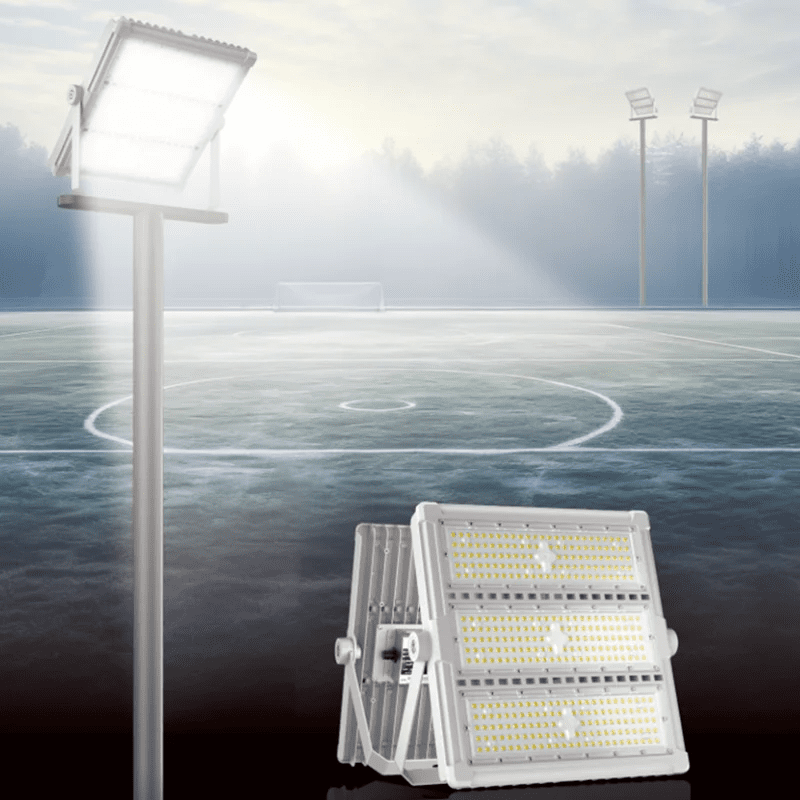
2.1 Purpose-driven design:
Badminton courts: Require high vertical illuminance and low glare. Recommended CCT 4500K–5700K, CRI ≥80. Typical layouts are symmetrical side mounting or uniform ceiling mounting; mounting height usually around 6–8 m.
Basketball courts: Illuminance requirements vary by level (300–1500 lx+), uniformity ≥0.7, CCT 4000K–5700K, CRI ≥80. Fixture placement must avoid direct and reflected glare; side or top mounting are common.
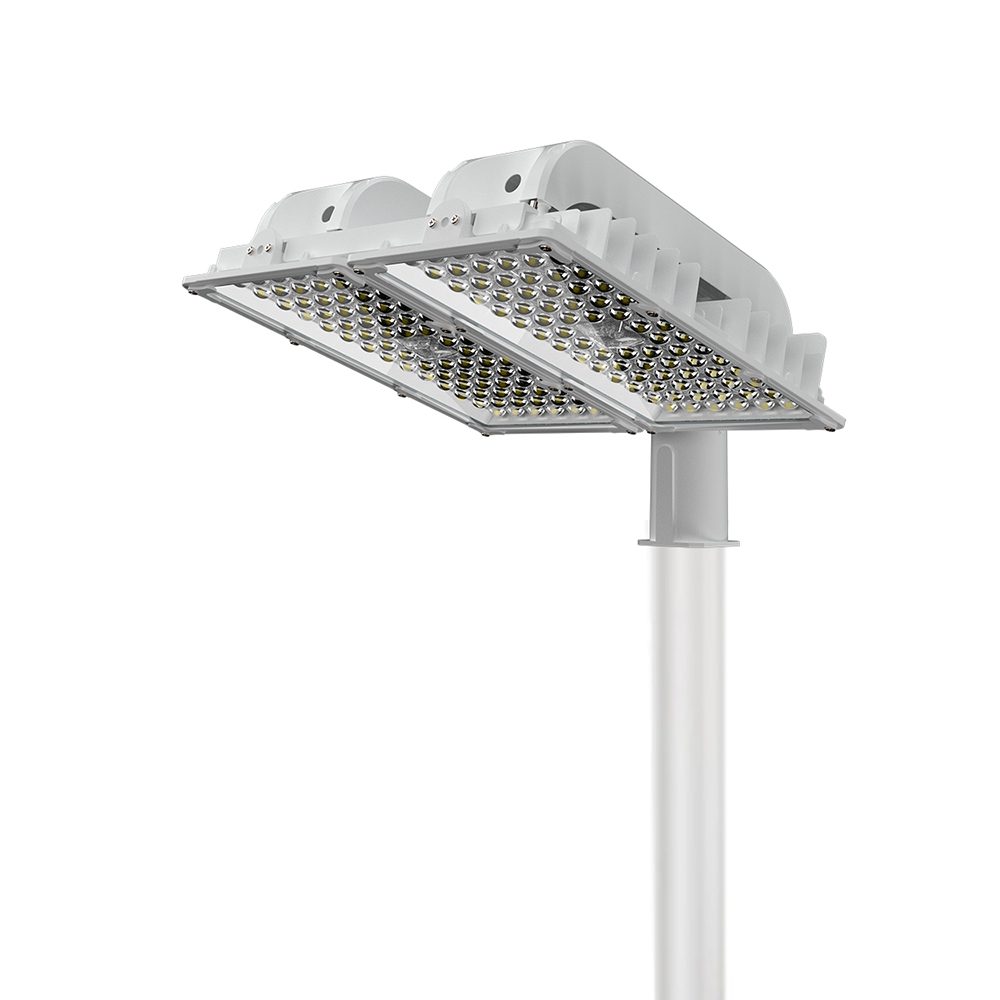
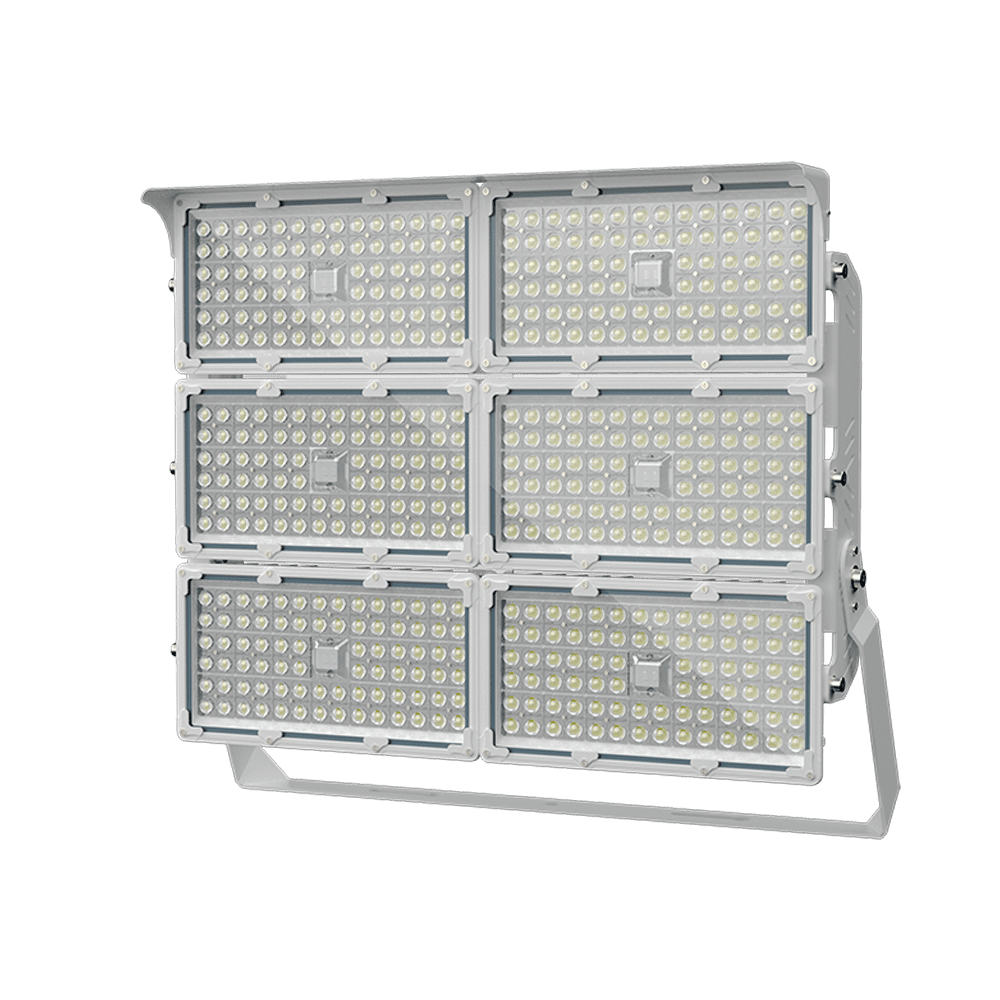
Football fields: High demands for illuminance (200–2000 lx+) and uniformity (≥0.7), especially for TV broadcasting. CCT often above 4000K, with cold white (5000K–6500K) commonly used. Fixtures are typically high-power LED floodlights or high-mast lights mounted at 15–45 m; strict control of light spill and glare is required.
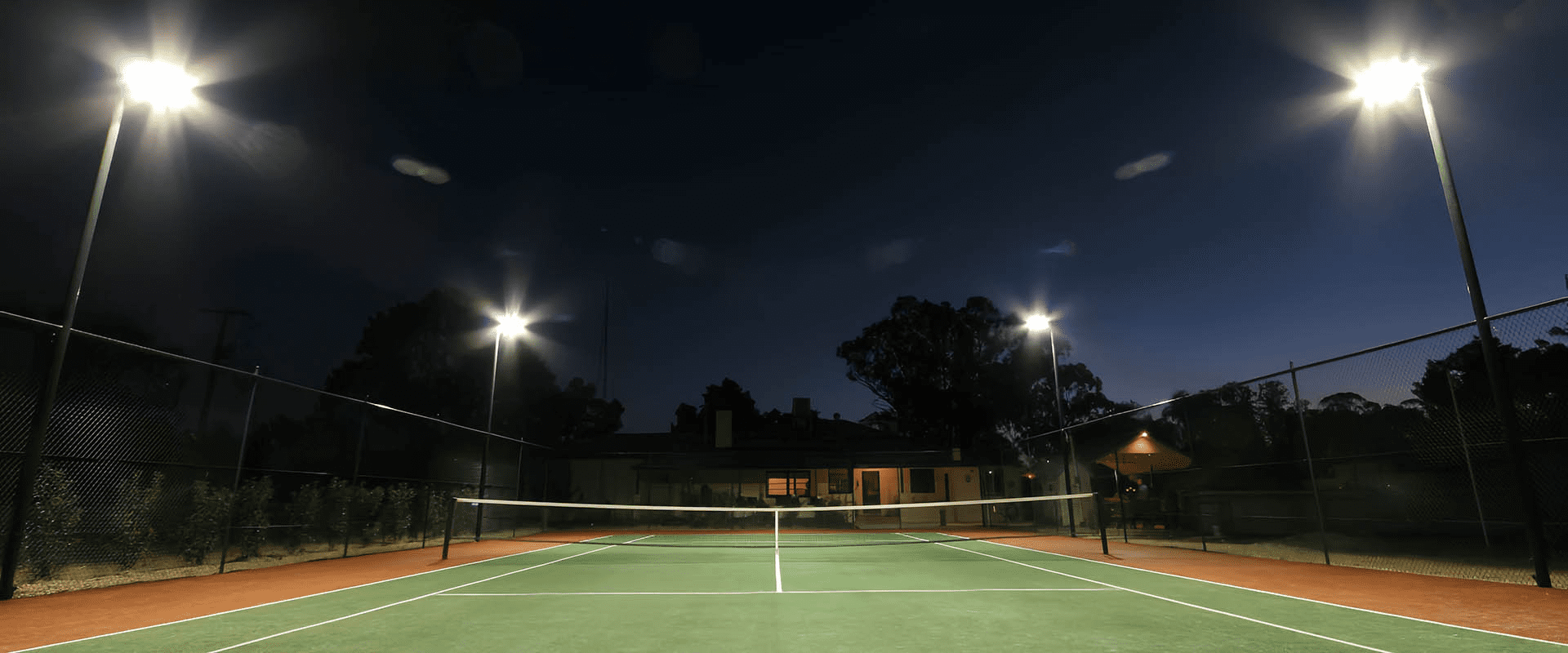
2.2 Key technical considerations:
Optical design: Select fixtures with suitable distribution patterns (narrow beams for long throw, wide beams for area coverage) and anti-glare features such as louvers, shields or specialized lenses.
Intelligent control: Integrate smart control systems (e.g., DALI, DMX) to enable on-demand lighting, scene switching and scheduled dimming for additional energy savings and operational convenience.
Durability and safety: Outdoor sports fixtures should have high IP ratings (e.g., IP65+), robust thermal management and impact resistance to ensure stable operation in varied weather conditions.
High-quality sports lighting design is essential to a successful venue. By understanding core metrics—illuminance, uniformity, color rendering, CCT, glare control, flicker-free operation—and selecting high-performance LED fixtures with proper layout and intelligent controls, you can provide excellent visual conditions for athletes, spectators and broadcasters while achieving energy-efficient, sustainable operation.